

Richard England
Antonia Critien
I consider myself fortunate to have had Pasmore, one of the giants of the British twentieth century art scene, as a personal friend and teacher. To have a personality of this calibre and stature as mentor and pedagogue is a unique and exhilarating educational experience. (Richard England in Temple Magazine 2021).
Highly decorated with a lifetime of awards and recognised as Malta’s most prominent modern architect, Richard England is known for injecting bright colours into his structures (Dar il-Ħanin Samaritan, Santa Venera), transforming religious and spiritual spaces (Church of St Joseph, Manikata) and intelligently fusing the old with the new (St James Cavalier). England is also an artist, author, poet, and sculptor.
Richard England has, multiple times, referred to the 1960s as the decade of hope, a springboard for artistic creation, instilling a newfound pride in Maltese history and traditions brought about by Independence. Looking back at the old to create the new is a thread England spins throughout his work. The design of the Aquasun Lido for example, echoes the shapes of the Neolithic stone monoliths. The 60s also saw the arrival of Victor Pasmore who set up home in Gudja in 1966. He was at this time working on a lengthy project – the Apollo Pavilion in Peterlee, UK – a multi purpose sculptural structure. Also looking back at local tradition for inspiration, in 1972, in an interview with Jasia Reichart, Pasmore said:
The great architectural sculpture, which I designed for Peterlee New Town, was a definite outcome of my experience in modifying and enlarging my Maltese house. It’s great thick stone walls, heavy cubic forms and sculptural quality have been re-enacted and transformed into a tensile cantilevered structure in reinforced concrete. (Victor Pasmore edited by Alistair Grieve)
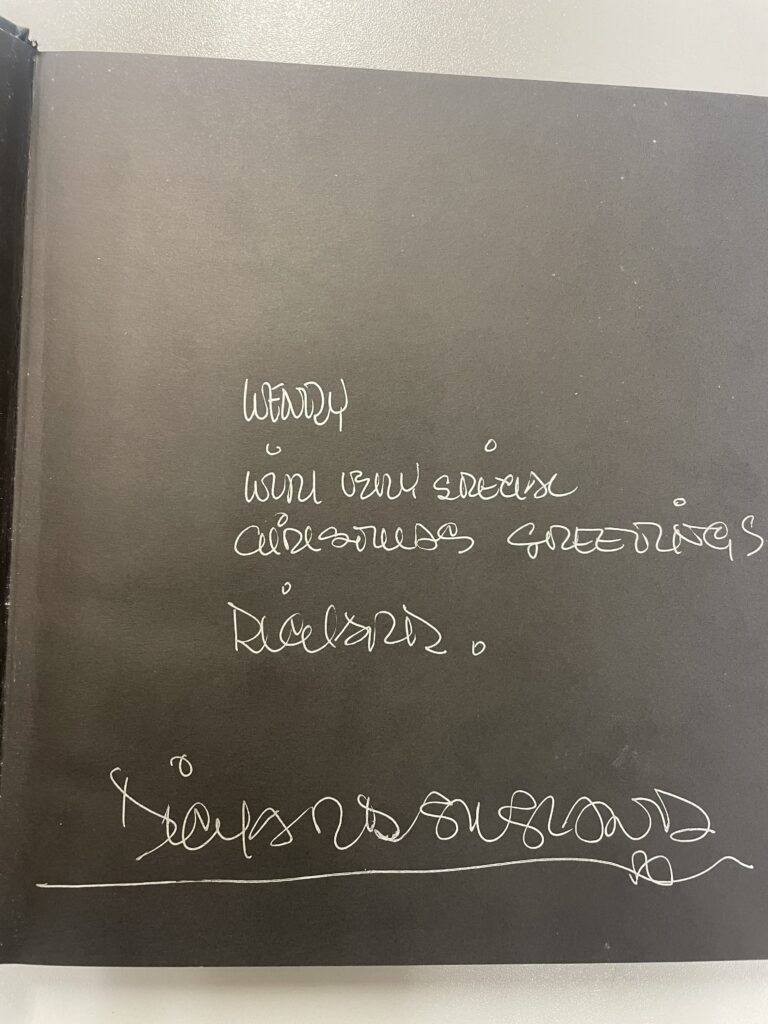
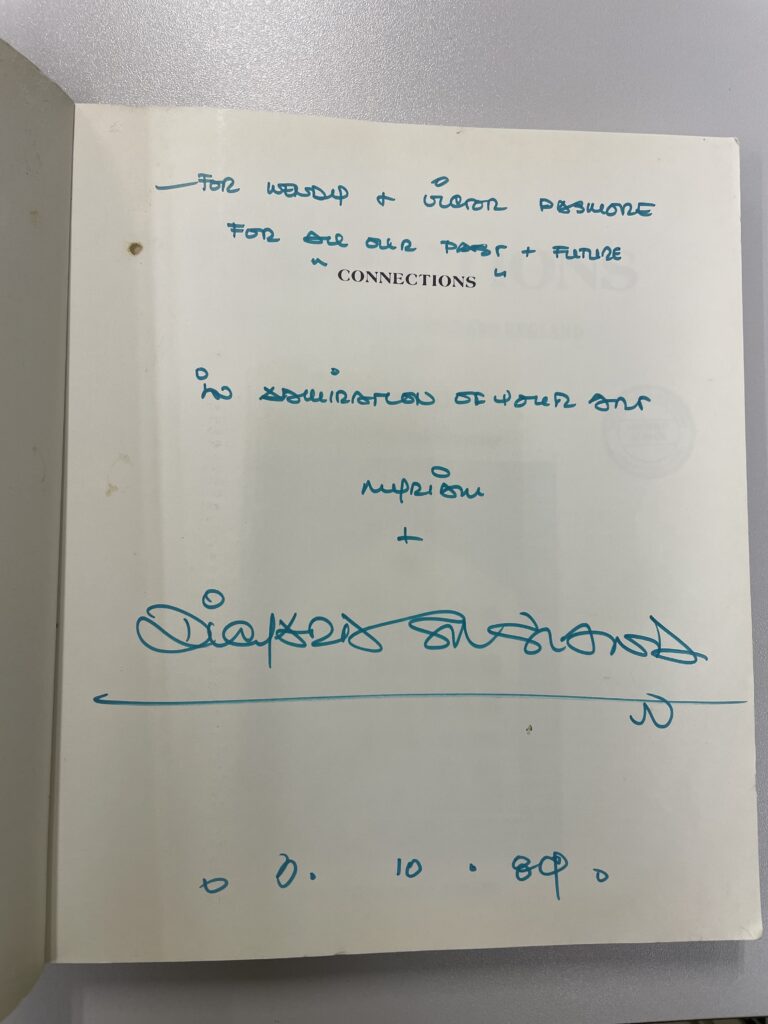
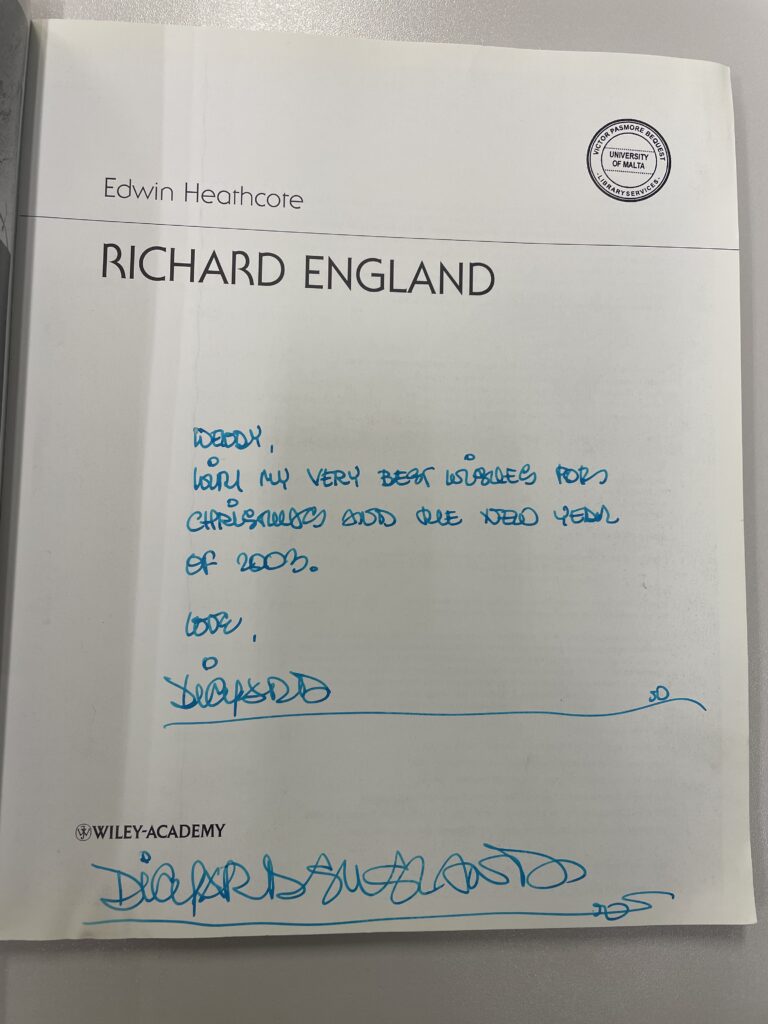
Richard England and Victor Pasmore became lifelong friends who not only inspired each other, but also a future generation of artists and architects. In Pasmore’s library, there are a number of books on Richard England, as well as some by him, with dedications to the Pasmores in his recognisable script. FPM is proud to have recently collaborated with Gallery Kolektiv Cite Radieuse on the exhibition Looking for Richard, presented at Le Corbusier’s Unite d’Habitation in Marseille. England’s first international retrospective brought together his buildings, poetry and drawings, and also featured a selection of photographs and recordings.
In 2018, Victor Pasmore’s children, John Henry Pasmore and Mary Ellen Nice, donated over 500 books and exhibition catalogues to the University of Malta, Archives and Rare Books Department
The Victor Pasmore Gallery is open to visitors at APS House, 274 St Paul Street, Valletta.