
Wartime Letters
Antonia Critien
It seems it was a love for J.M.W Turner that initiated the friendship between Kenneth Clark and Victor Pasmore back in the 1930s. Clark, who was Director of the National Gallery in London between 1934 and 1945, recalls first meeting him after Pasmore had some words to say regarding a new frame that Clark acquired for one of the Turner paintings in the gallery. By this time, Pasmore had joined the London Group of artists and in 1935 he exhibited his painting Tea Gardens. This work, heavily influenced by Impressionism both in style and subject matter, was purchased by Kenneth Clark – the first of many future acquisitions. In 1938, Clark’s decision to financially support Pasmore was a life-changing moment in the artist’s career. This allowed Pasmore to leave his job and focus solely on art, having recently set up the Euston Road School with William Coldstream and Claude Rogers. Thus a patronage was established as well as a life-long friendship.
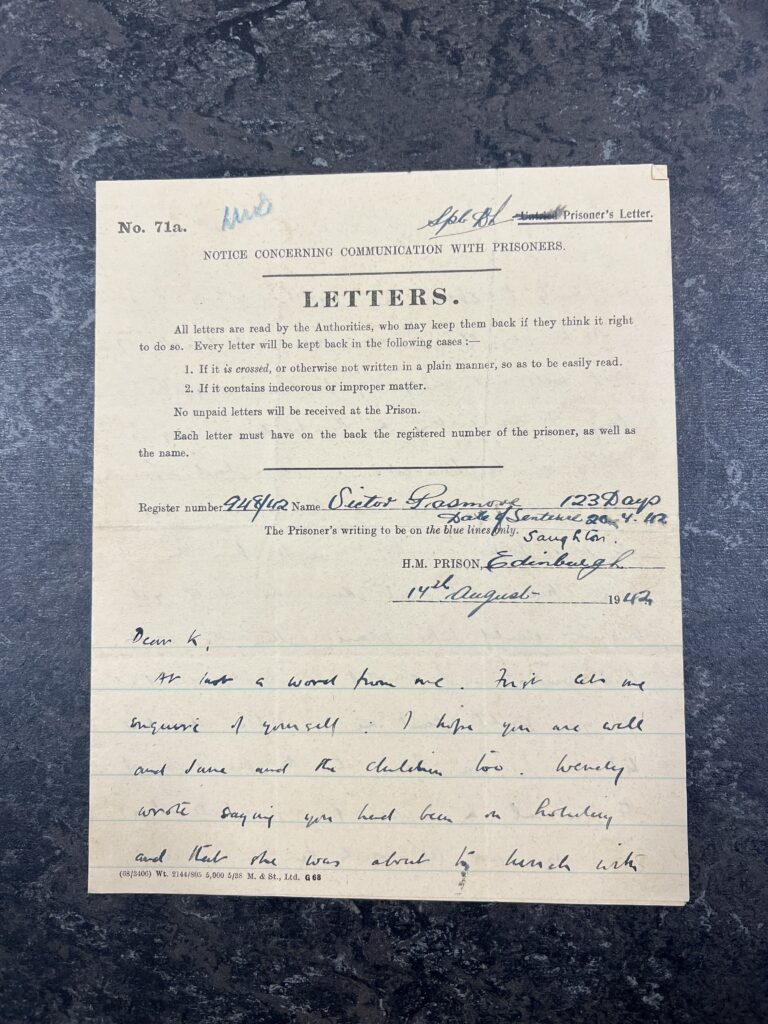
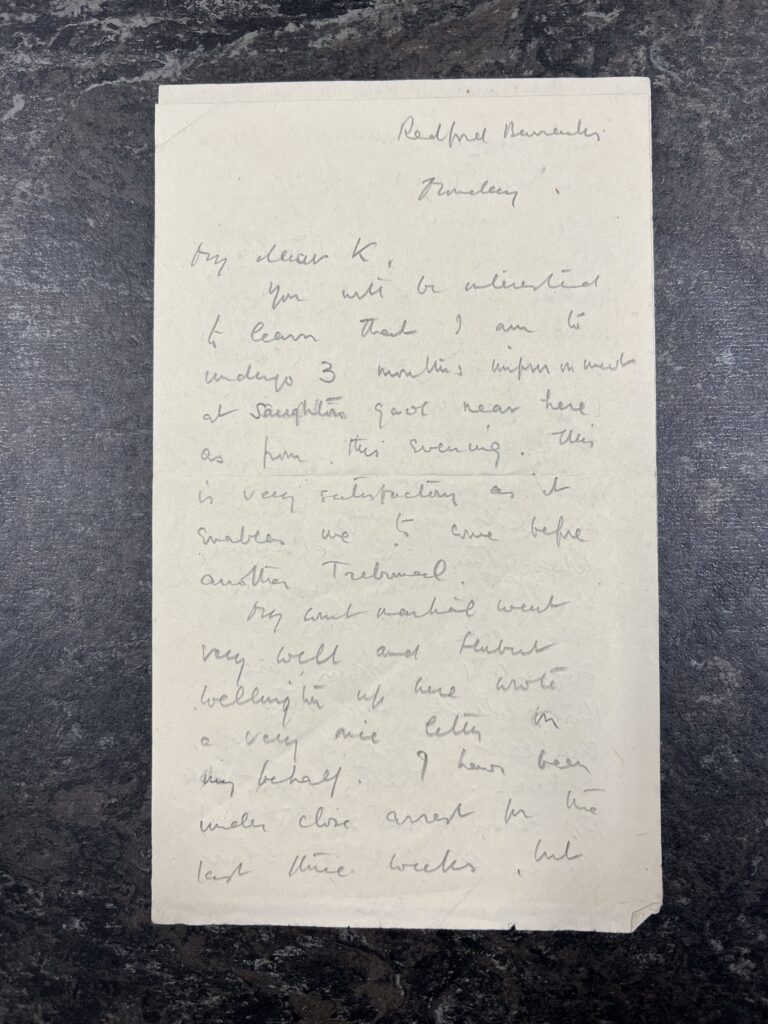
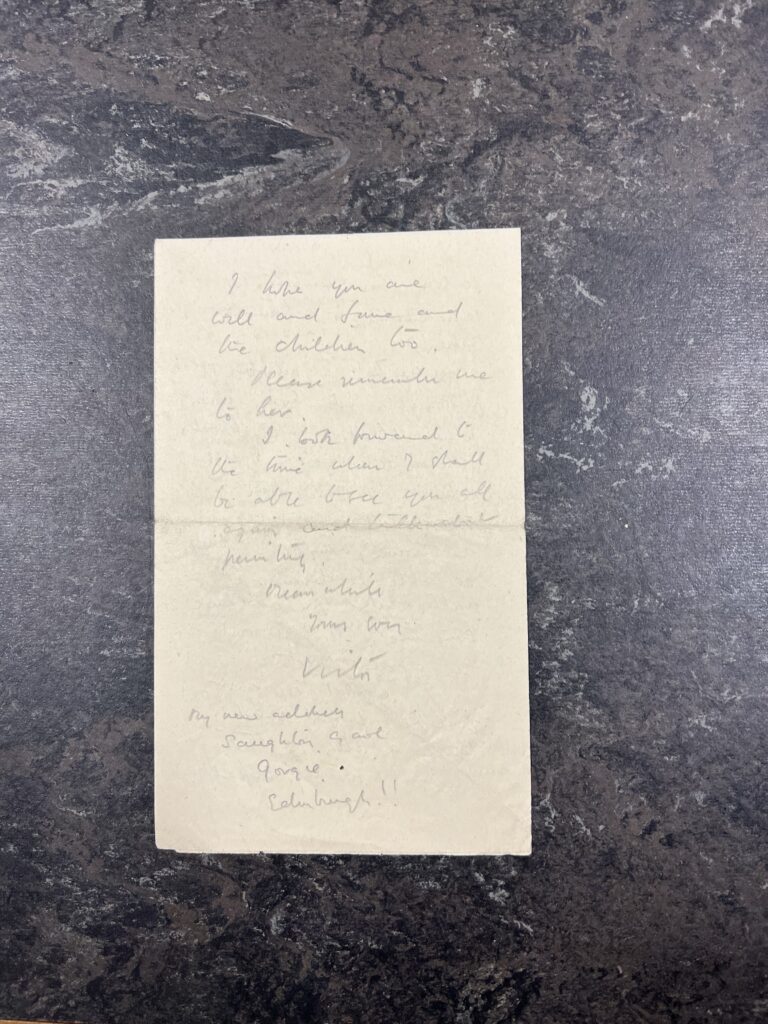
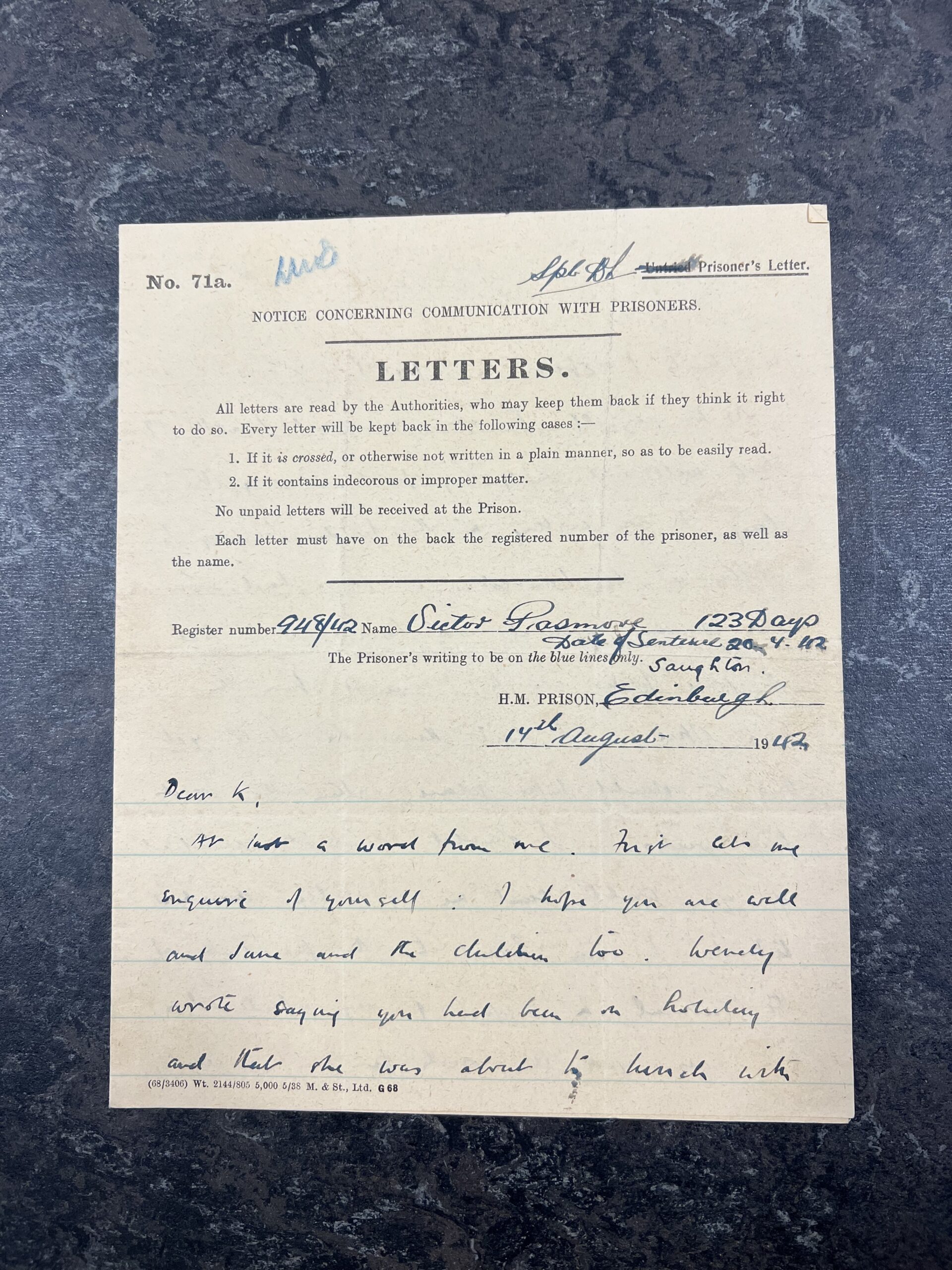
In the archives of the National Gallery, London, are two letters from Pasmore to Clark, one which he wrote from Redford Barracks in 1941 whilst serving in the army, and the other whilst in prison in Edinburgh in 1942. From the onset Pasmore was adamant he wanted to have nothing to do with the war, and in 1939 tried unsuccessfully to register as a conscientious objector. All my efforts to be registered as a conscientious objector have failed. I do not feel that going to prison to prove my point is very constructive, so I shall probably accept what comes to me now (Letter to Clive Bell 1941). He was called up to serve in 1941 however he absconded whilst on leave and was arrested and sent to prison. These letters to Clark show a softer, more vulnerable side to Pasmore. There are letters and interviews I have read from throughout Pasmore’s life that sometimes come across as too enigmatic, too opinionated, sometimes too superior. Whilst it is always possible to note his intelligence and his enthusiastic fervour for art, there are also times he comes across as dry or irritated. It becomes apparent over time that the process of creating was so meaningful to Pasmore that explanations of what a work of art actually portrayed or symbolised, played a significantly less relevant role. This in itself puts him well on the path to abstraction, for in abstract art, much less of the artist’s ideas are evident and, much more of the viewer’s interpretation is required.
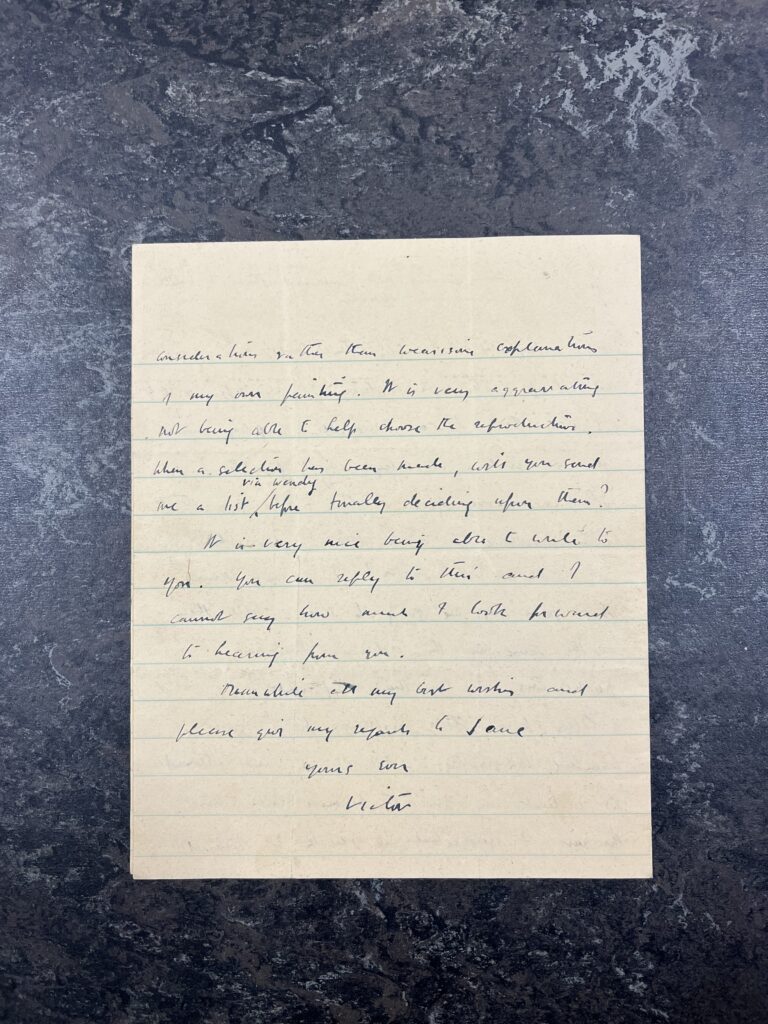
So it is only natural that these letters to Clark, written from confinement, feel so real and unassuming. They convey the distress of uncertainty, the frustration at not being able to work as an artist and the gratitude for Clark’s friendship and support. In both letters Pasmore asks Clark for a letter of character recommendation that he can present to the Tribunal. Can you (1) vouch for my sincerity and integrity? (2) say that my views are consistent with the nature of my life work? (that you are not surprised that I am a conscientious [objector]) (3) say that I can usefully employ myself as a civilian […] and painter. But anyway first write what you think fit, something on these lines if possible. Creating art remains his primary preoccupation, and whilst he begins on a light hearted note – I have been under close arrest for the last three weeks, but have amused myself by painting various large scale versions of the Regimental Coat of Arms in the guardroom walls! I shall now not only be able to design a pub sign for Jane but paint it as well! – there is an evident restlessness as he tries to help conclude the details of a short book on himself to be written by Clive Bell. How are the books? I do not know what form they are going to take. Will they be the same as the ordinary Penguin publications or something different? I had a letter from Clive asking for a sort of painting biography. But I am not allowed to conduct my private business from here. However I suggested he stick to general considerations rather than wearisome explanations of my own painting. It is very aggravating not being able to help choose the reproductions. Interesting too here is the use of the word wearisome when referring to explanations of his paintings. Again, it is clearly something Pasmore either did not enjoy talking about, or found repetitive as a subject, or found it difficult (and unnecessary) to fully convey an analysis of his work.
Kenneth Clark did of course write a letter of recommendation: To whom it may concern, I have known Victor Pasmore for about ten years and can vouch for the fact that he is a man of absolute sincerity and integrity. In fact he is one of the most completely sincere human beings I have met…In my view his first duty to society is to paint (Victor Pasmore ed. Alistair Grieve 2010).
Victor Pasmore was released from prison on the 30 September 1942. He remained close friends with Kenneth Clark up until Clark’s death in 1983.