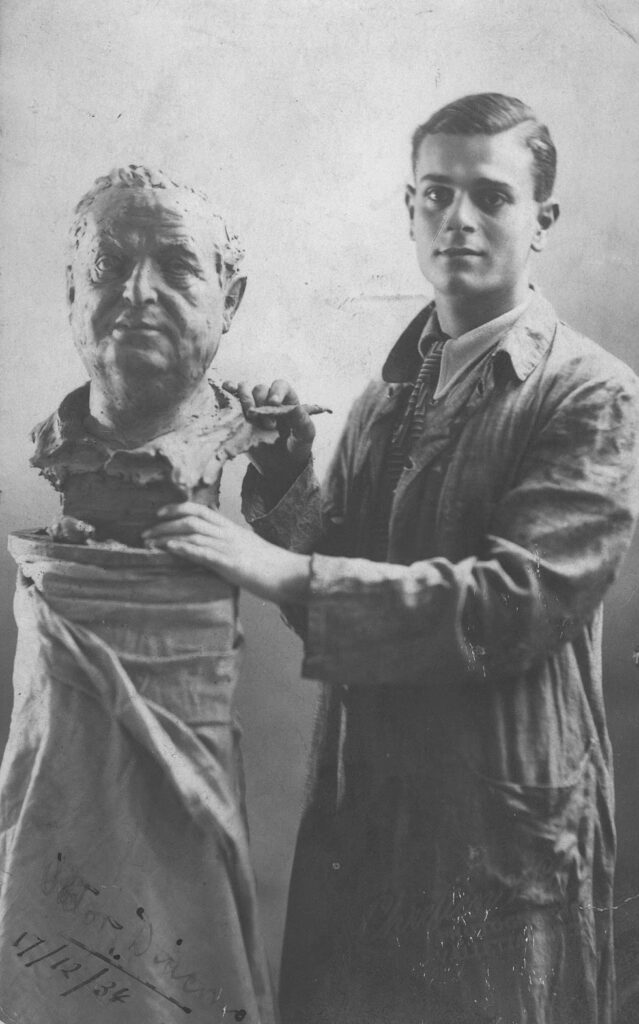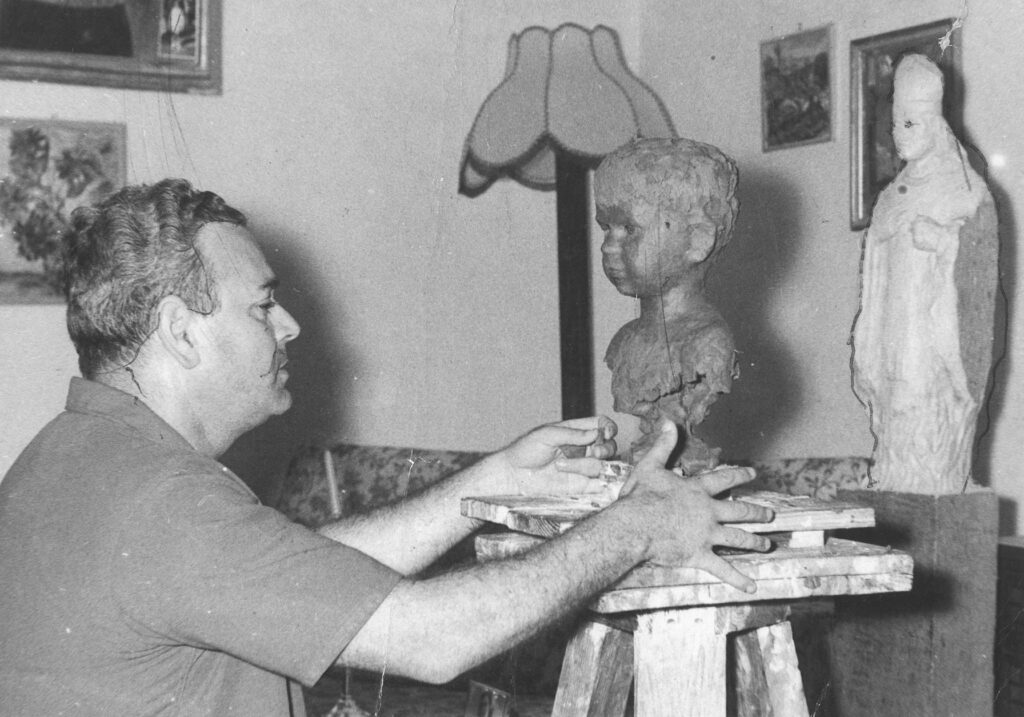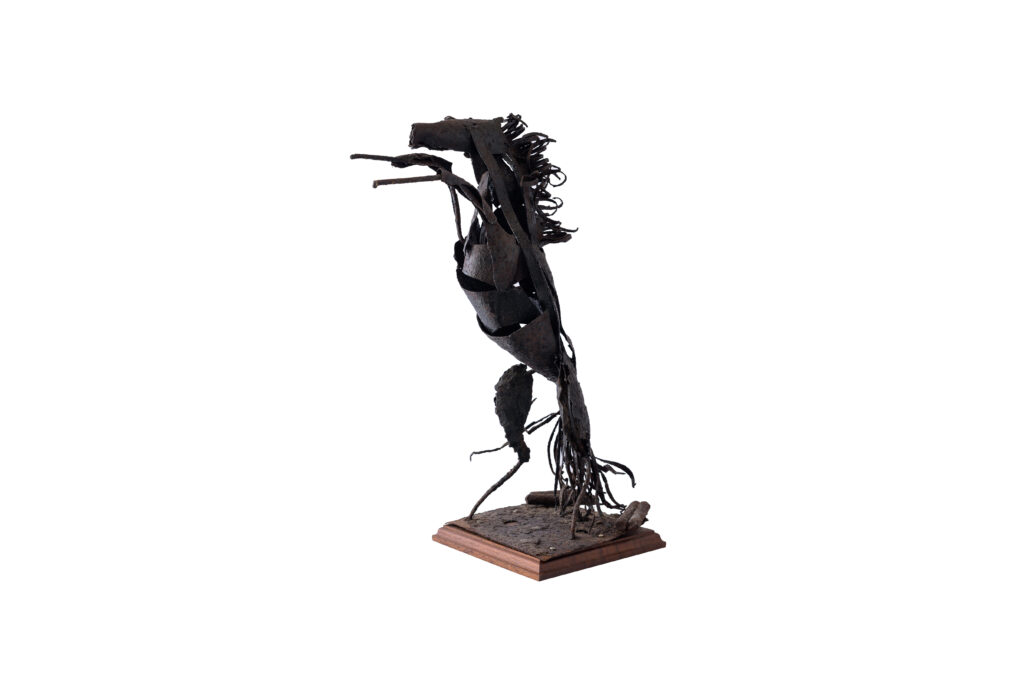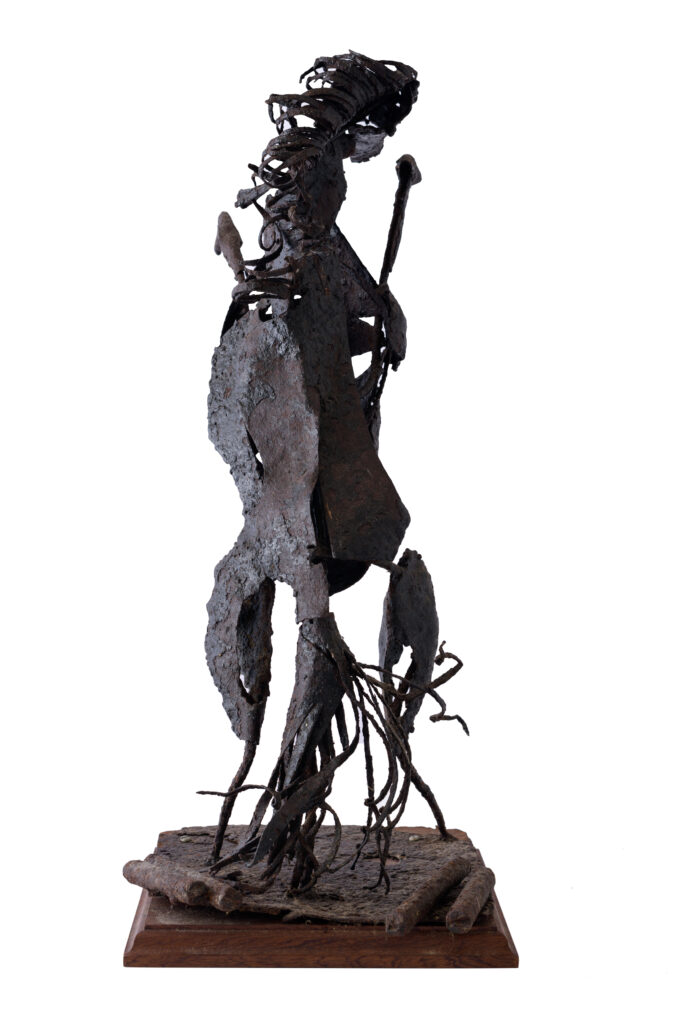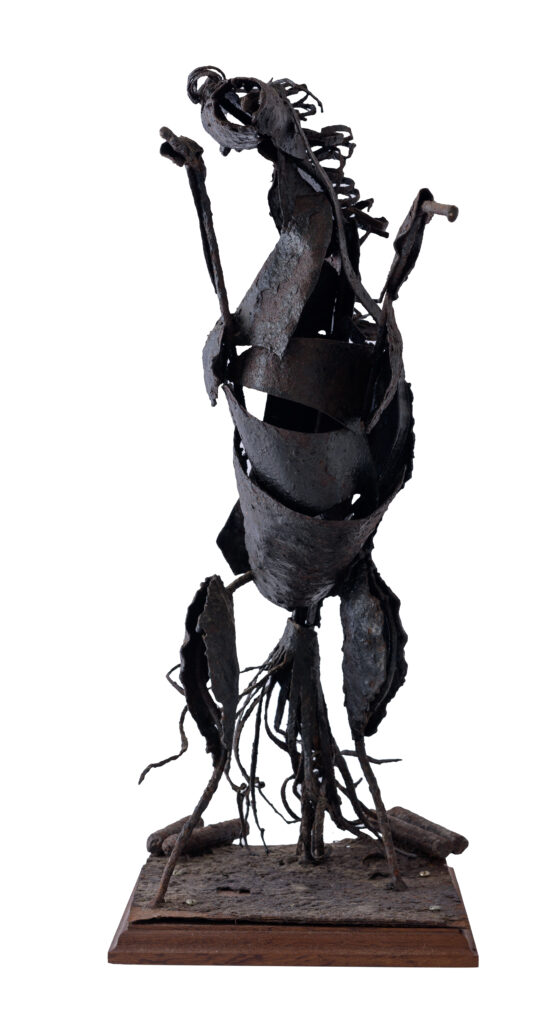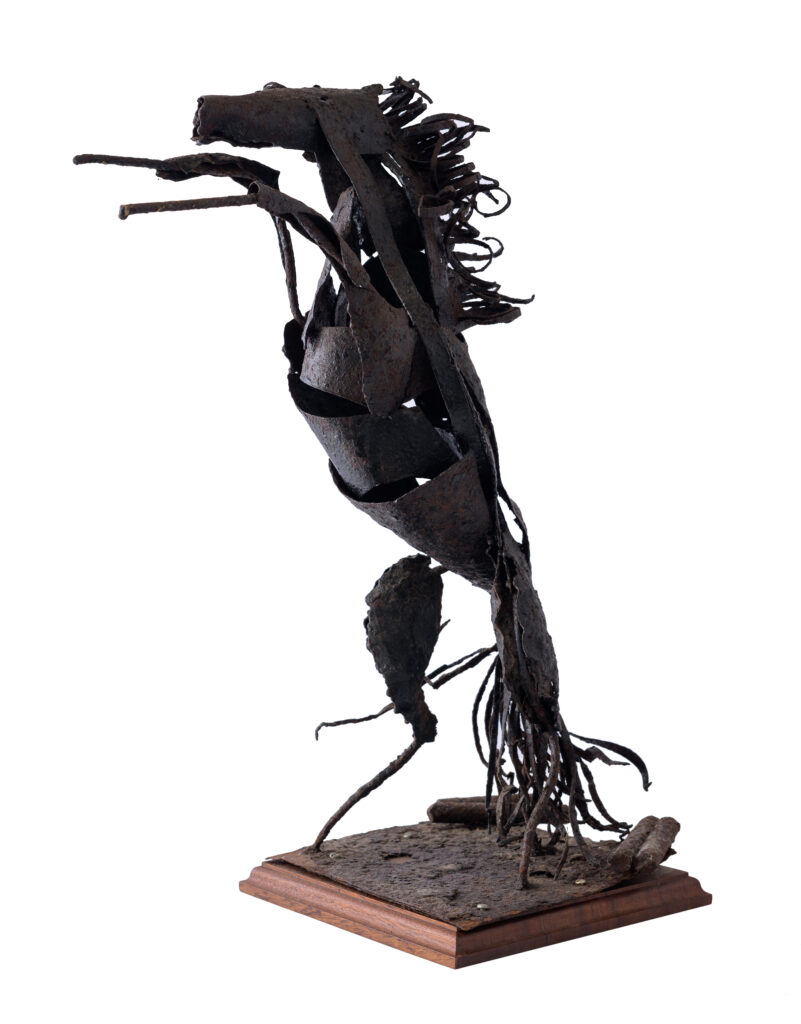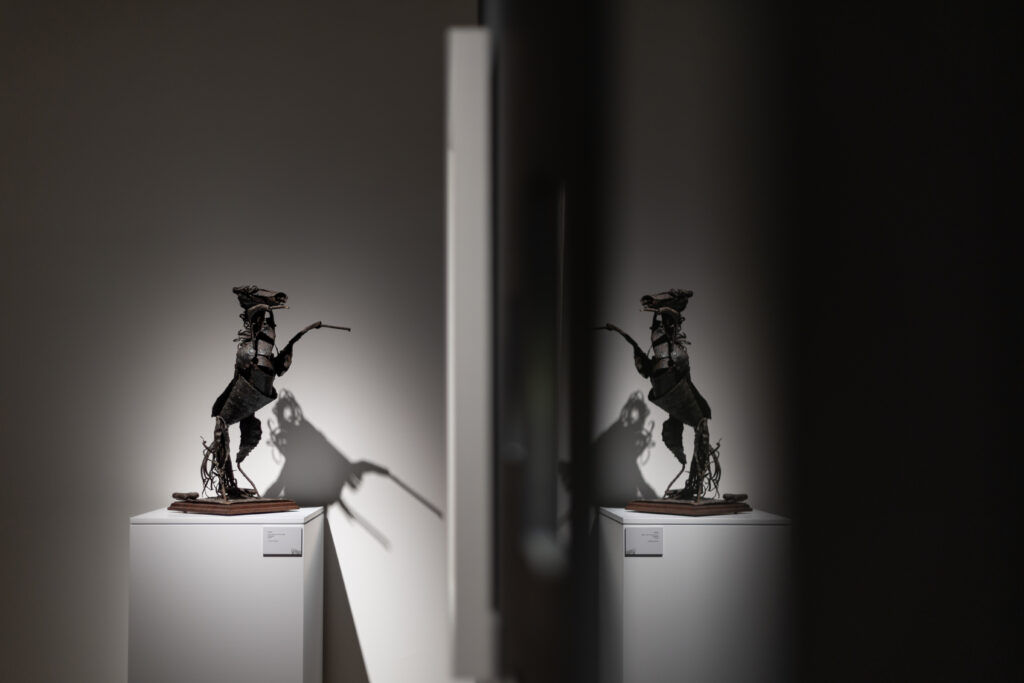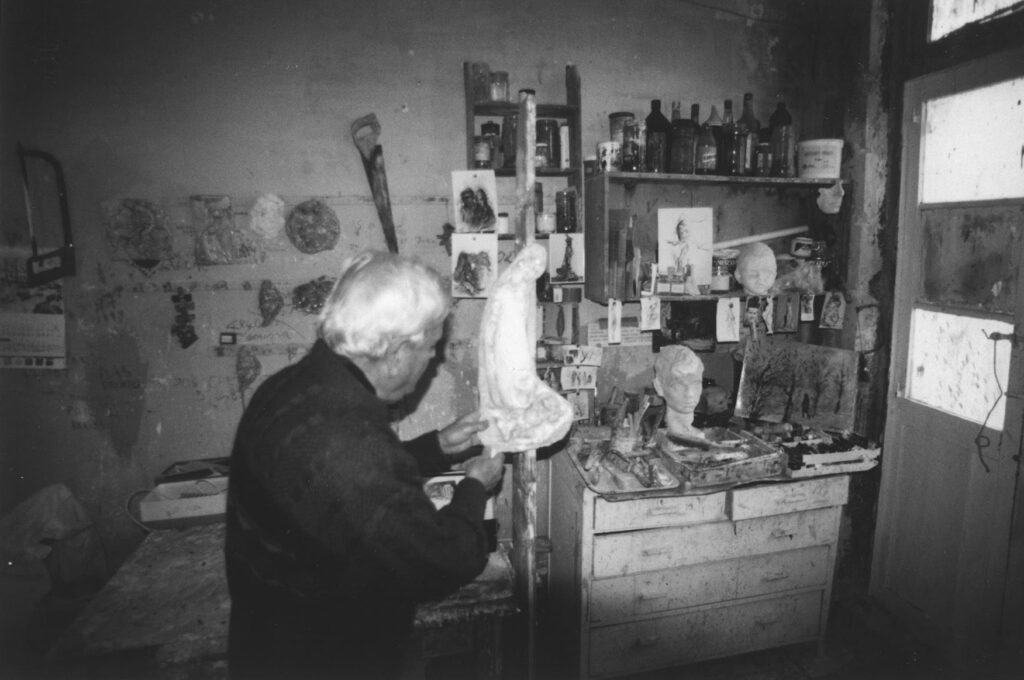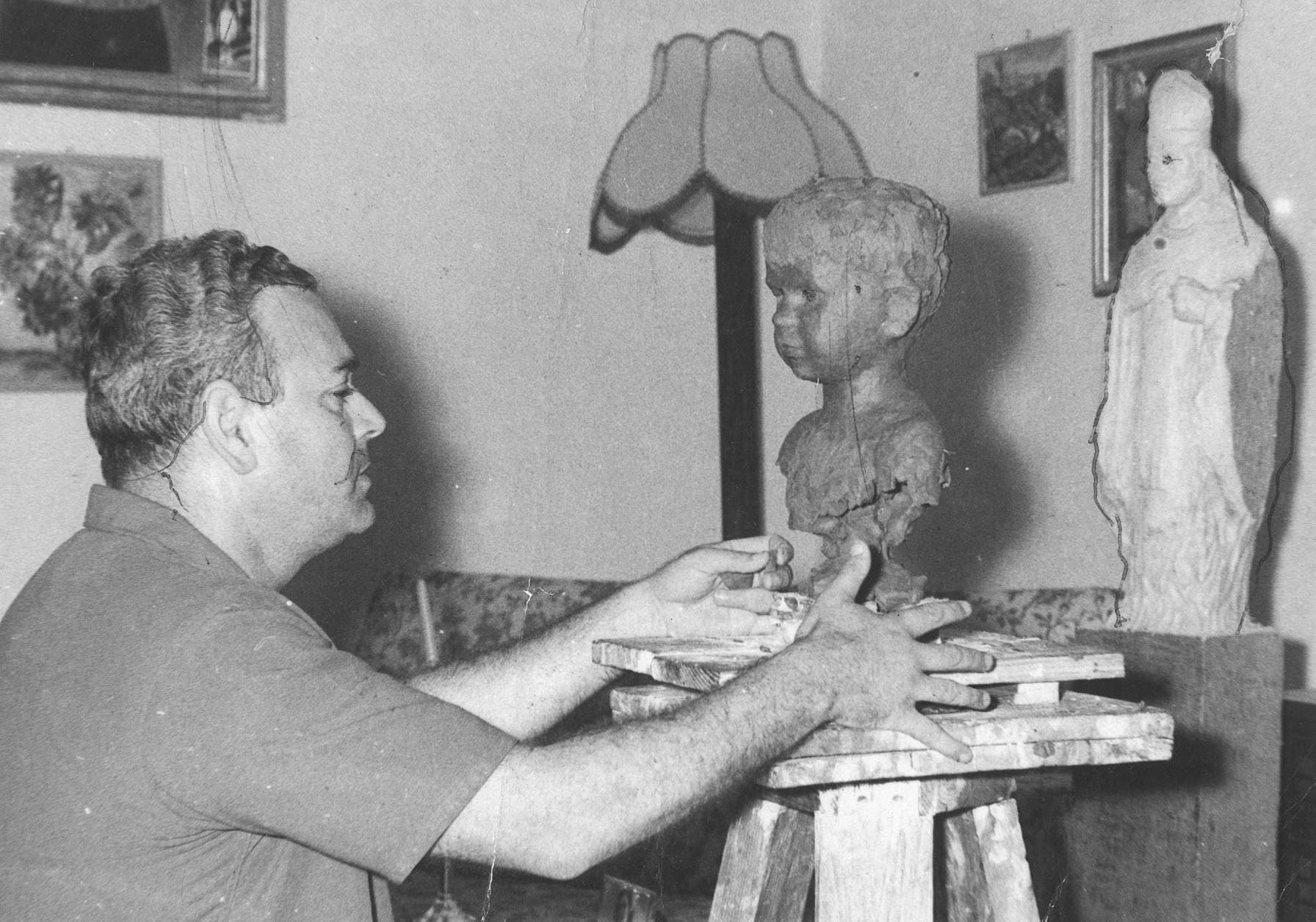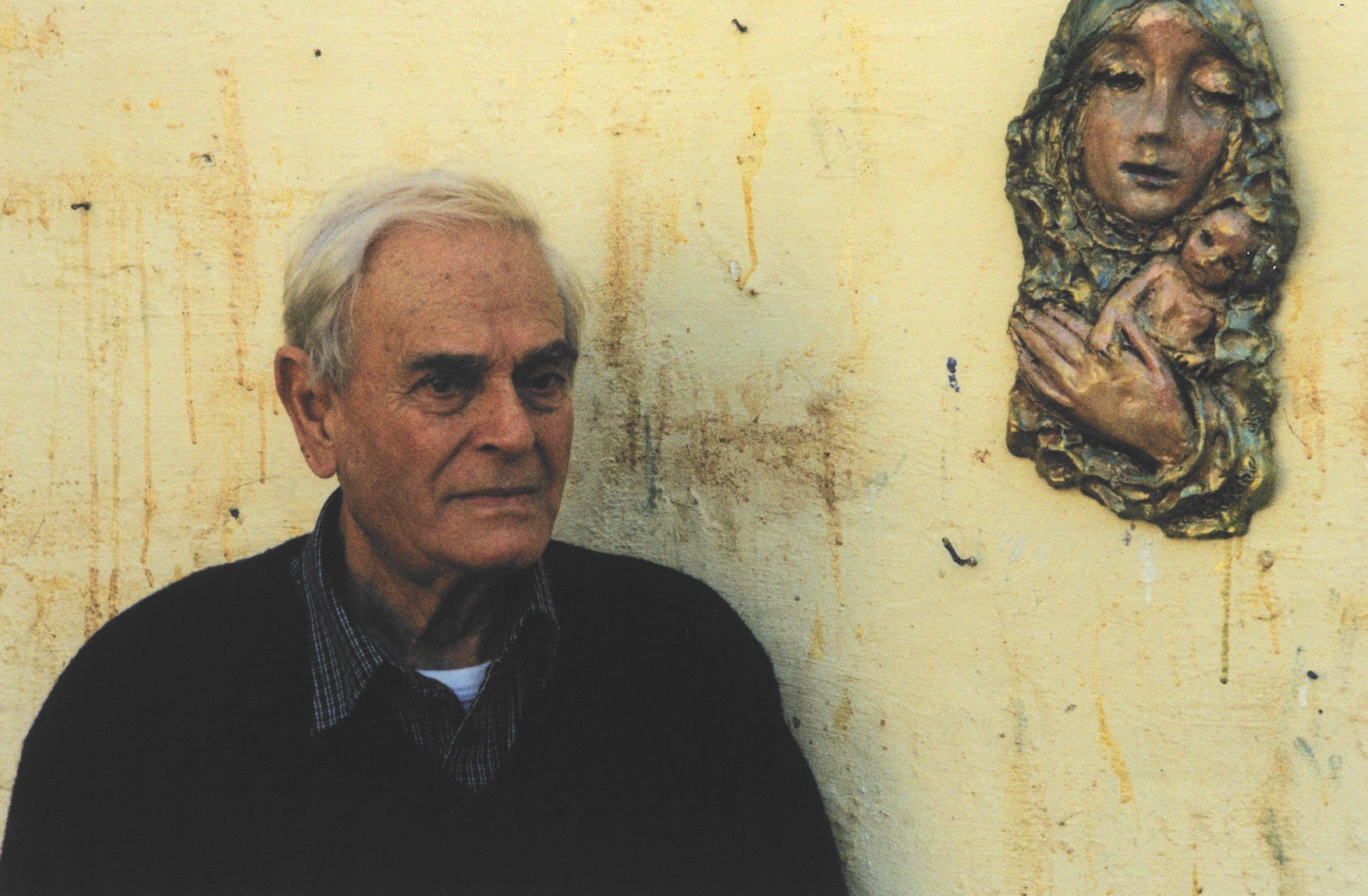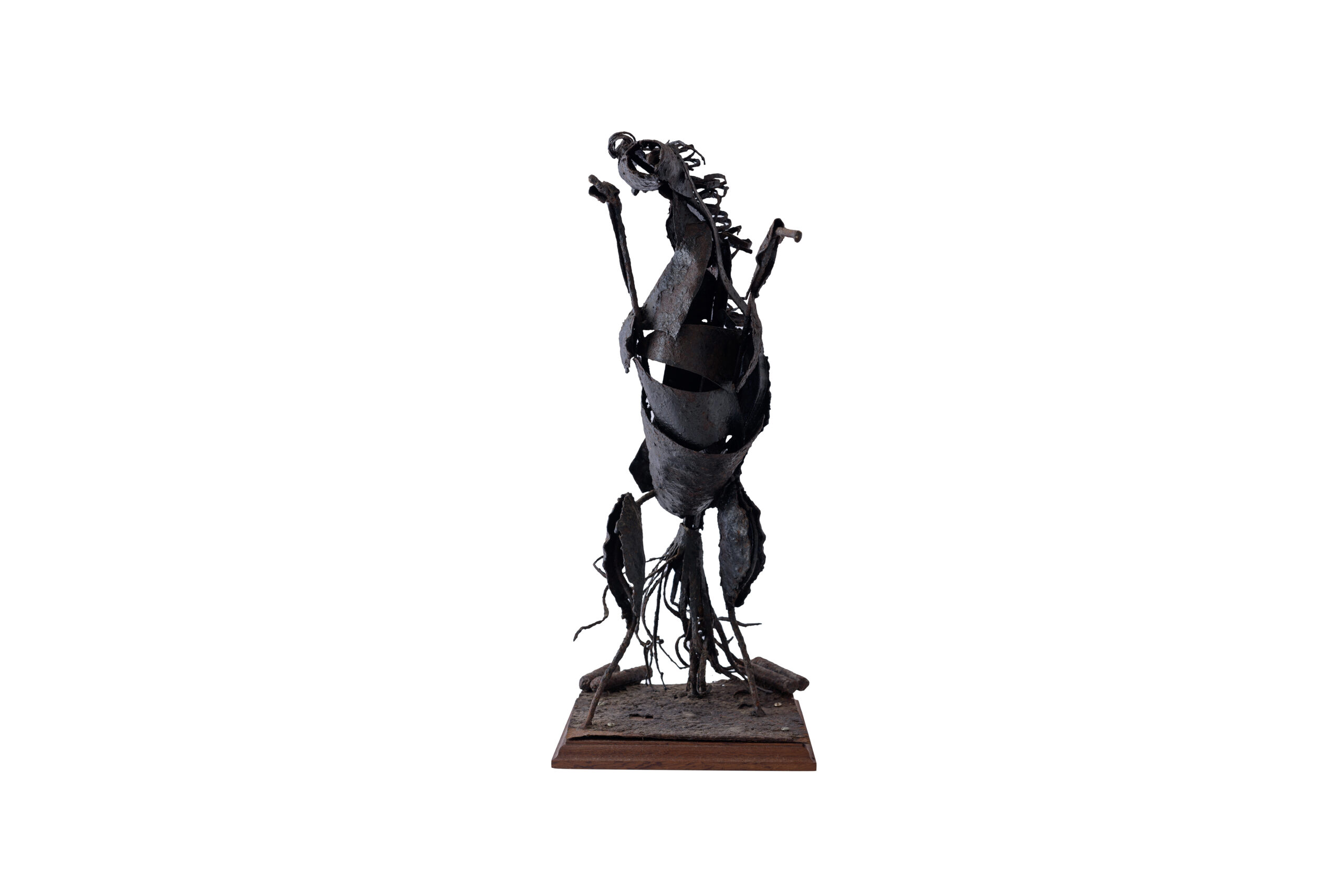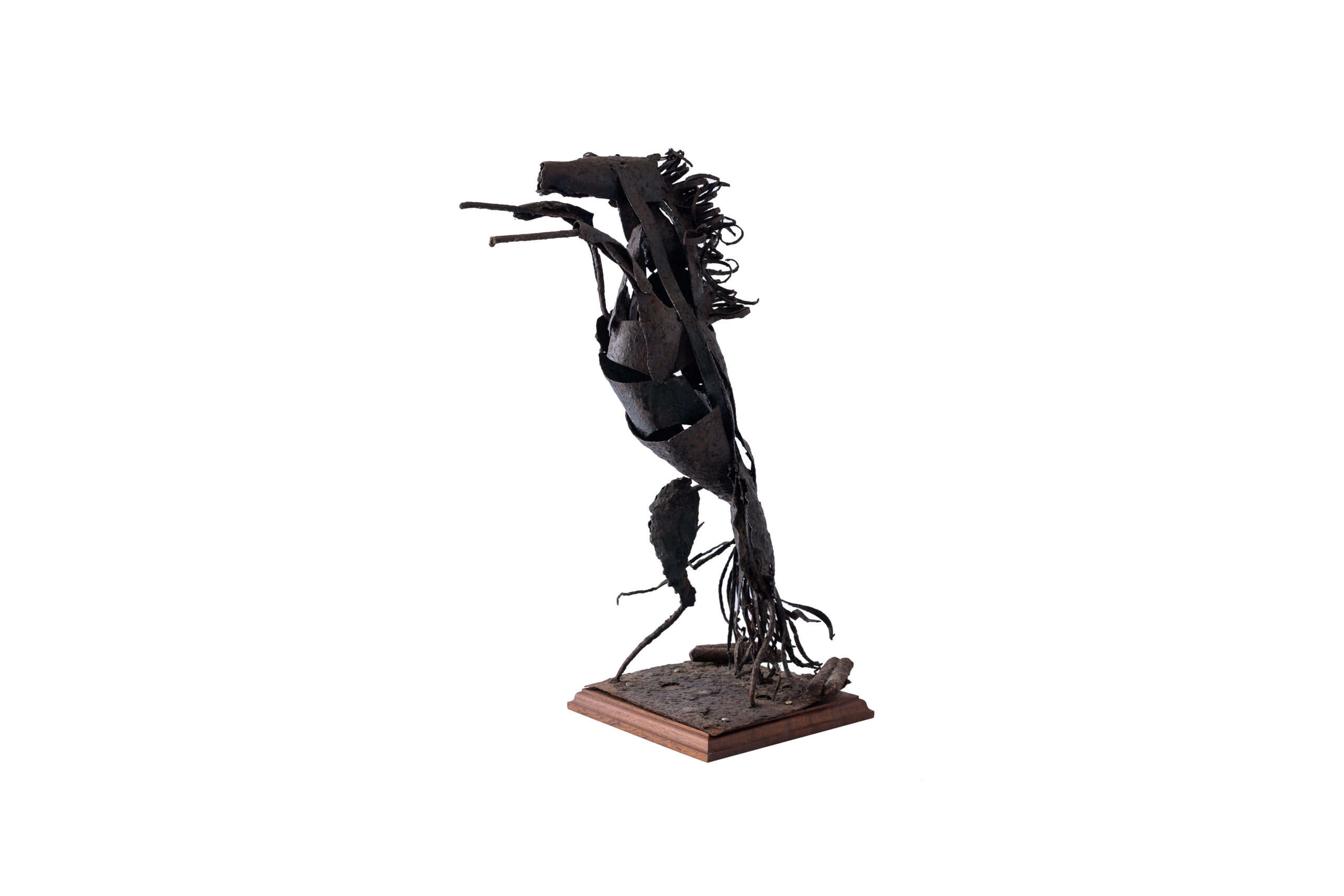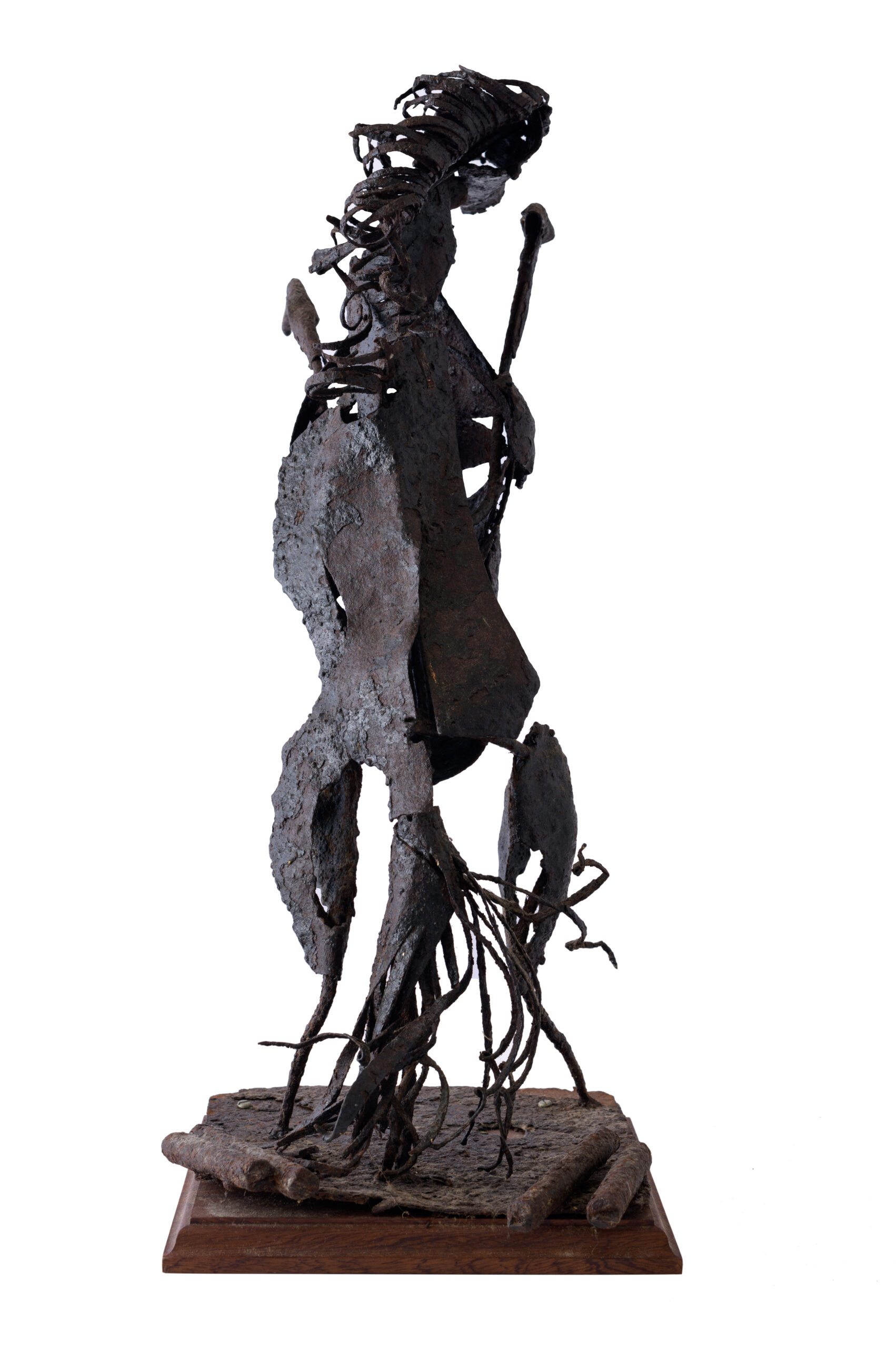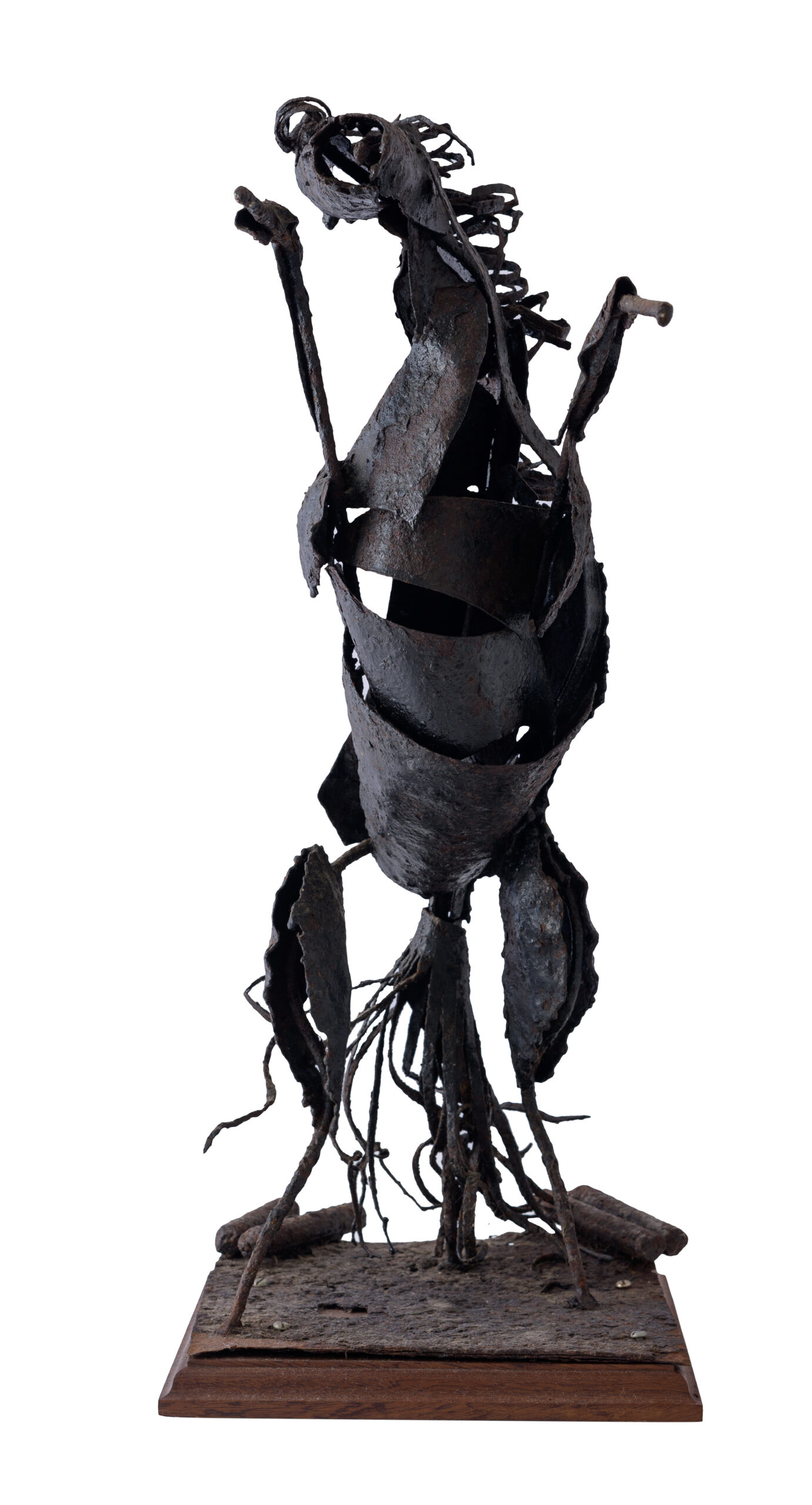
Victor Diacono was 82 years old when he had his first solo exhibition, curated by Joseph Paul Cassar and held at the University of Malta. A humble and reserved artist, Diacono kept mostly to himself, rejecting group associations and showing little of his abundant oeuvre despite receiving numerous commissions. His contribution to Maltese modern sculpture however is invaluable in its impressionistic style, where the attraction is in the suggestion of the subject rather than a finished product. Diacono would in fact ask, ‘Is a work ever ready, ever finished?’ 1
PERSONAL
Victor Diacono was born on the 12 December 1915 to Anthony Diacono and Erminia nee Chretien, one of six siblings, born into a family of artists – painters, silversmiths, engravers, and the artist Gianni Vella (1885-1977) who was married to his aunt Mary nee Chretien. It is no surprise that Diacono showed an interest in art from an early age, which was noted by his father who showed some sketches to the teacher of sculpture Antonio Micallef (1883-1957). Micallef encouraged Anthony Diacono to send his son to the School of Art which Diacono attended between 1929 and 1937. On first arriving, Diacono mistakenly walked into a class of sculpture instead of painting, but was so intrigued by it that he opted to stay and study sculpture under George Borg (1906-1983). In 1937 Diacono won the sculpture scholarship to study at the Regia Accademia di Belle Arti, Rome, with his bust of Ambu – an old man who sold nuts outside the School of Art in Valletta and was regularly used as a model. The prize for painting that year was won by Willie Apap (1918-1970), and the two artists set off to Rome. In Rome Diacono studied under Angelo Zanelli (1879-1942) who was responsible for the sculptures within the Monument to Vittorio Emanuele II. Having skipped the first year following the advice of artist Giuseppe Galea (1911-1993), Diacono graduated in three years instead of four. However, he claims to have learnt most from his peers, particularly a Salvatore Battaglia from Sicily who challenged the teachings of the Accademia and encouraged Diacono to find his own path. A great influence at this time was the work of the sculptor Medardo Rosso (1858-1928) who gave up Realist influences for Impressionist techniques and whose work Diacono encountered in an exhibition in Rome. With the declaration of war looming, Diacono left Rome and returned to Malta in 1939 where he worked as a government clerk for a few years. Having not yet utilised his full scholarship, in 1944 Diacono decided to continue with his studies abroad. With a preference for France but no knowledge of French, he decided to go to England. Here he studied at the City and Guilds of London Art School. He gained further experience visiting the various museums and exhibitions and also became close friends with artist Frank Portelli (1922-2004) who was studying there at the time. On his return to Malta, Diacono taught at the Lyceum in Ħamrun and later in Valletta. In 1951 he joined the Phoenica Hotel, working as a cashier, where he stayed until his retirement. His time there was fruitful not simply because of the people he met, but the constant movement of people, the action, the bustle of a hotel front desk, were fuel for his art resulting in endless sketches which sometimes people also bought.
WORKS
‘It is all in my head and my hands have to simply bring this idea forward into reality’2.
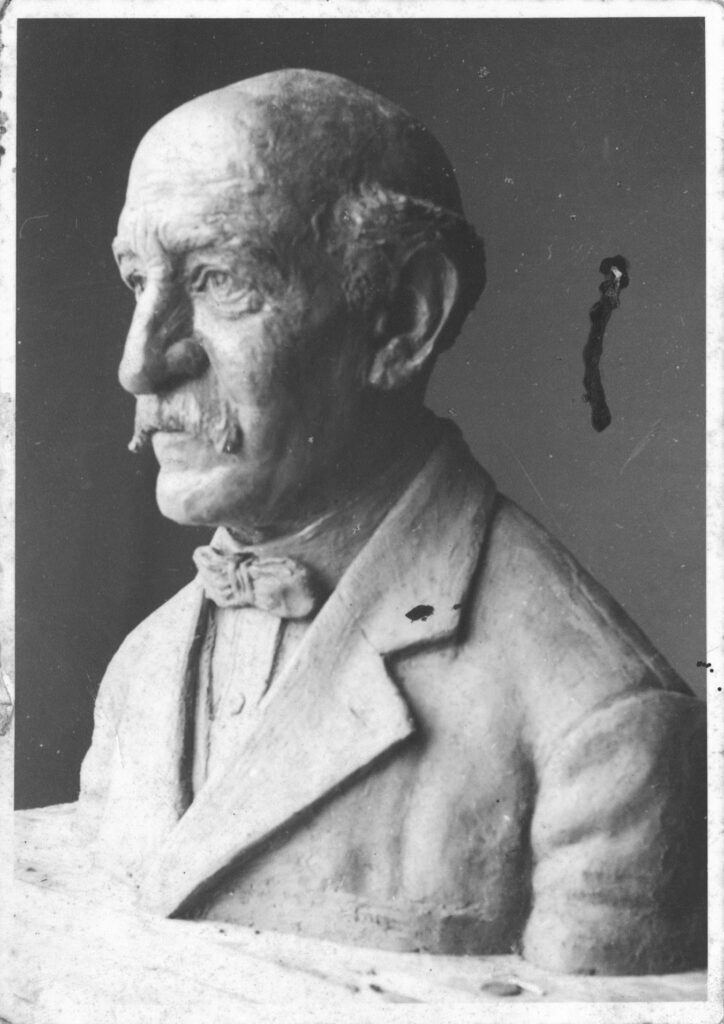
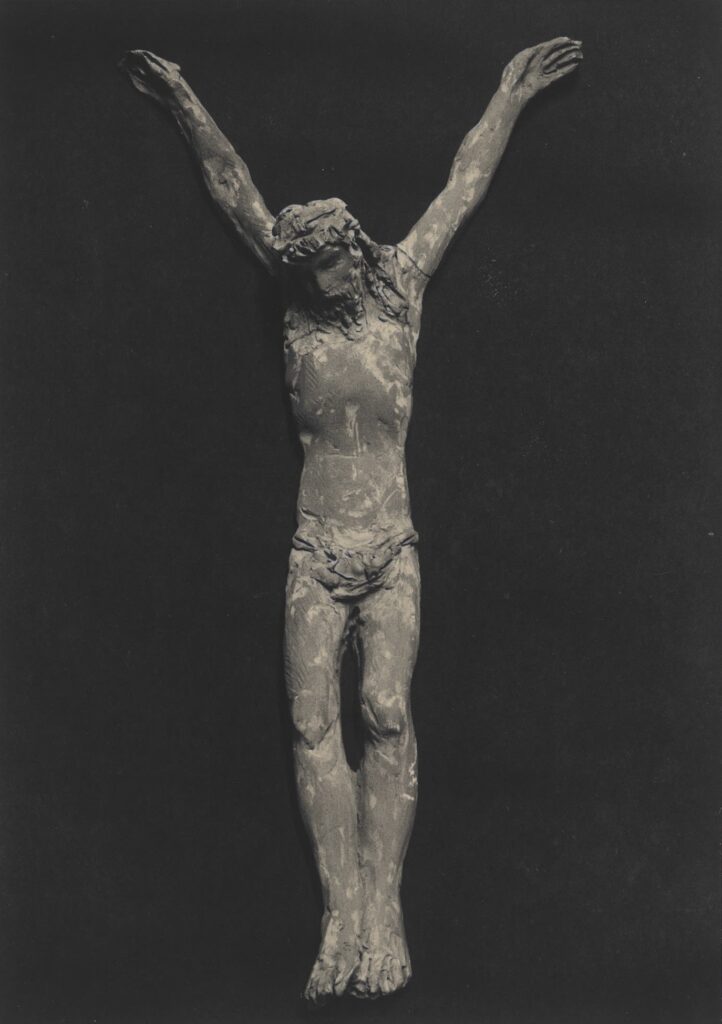
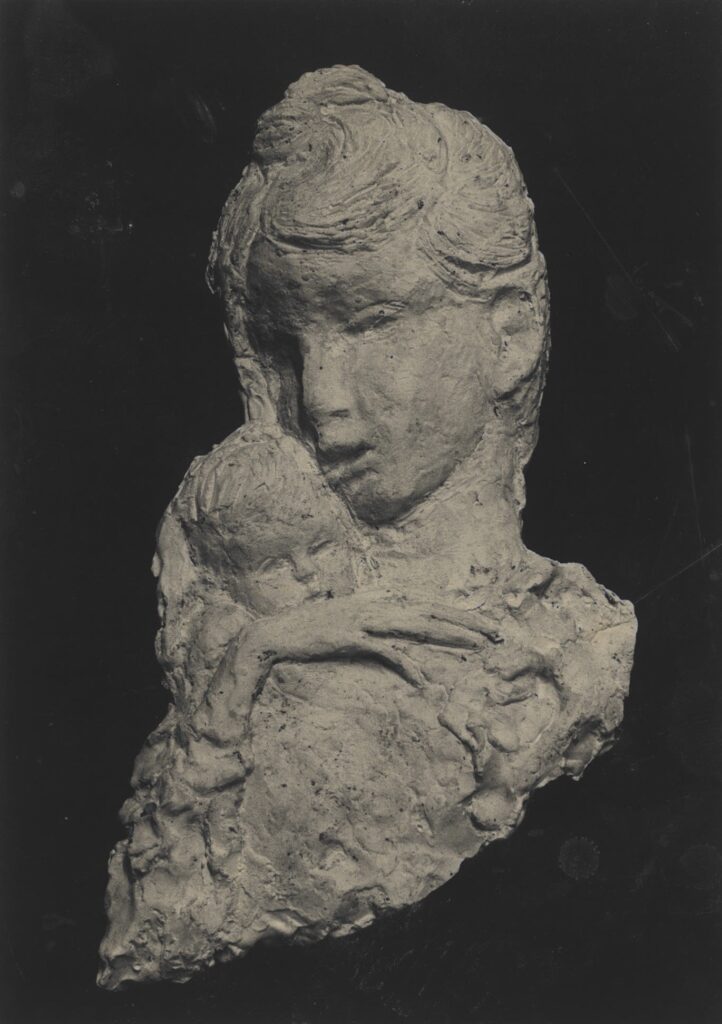
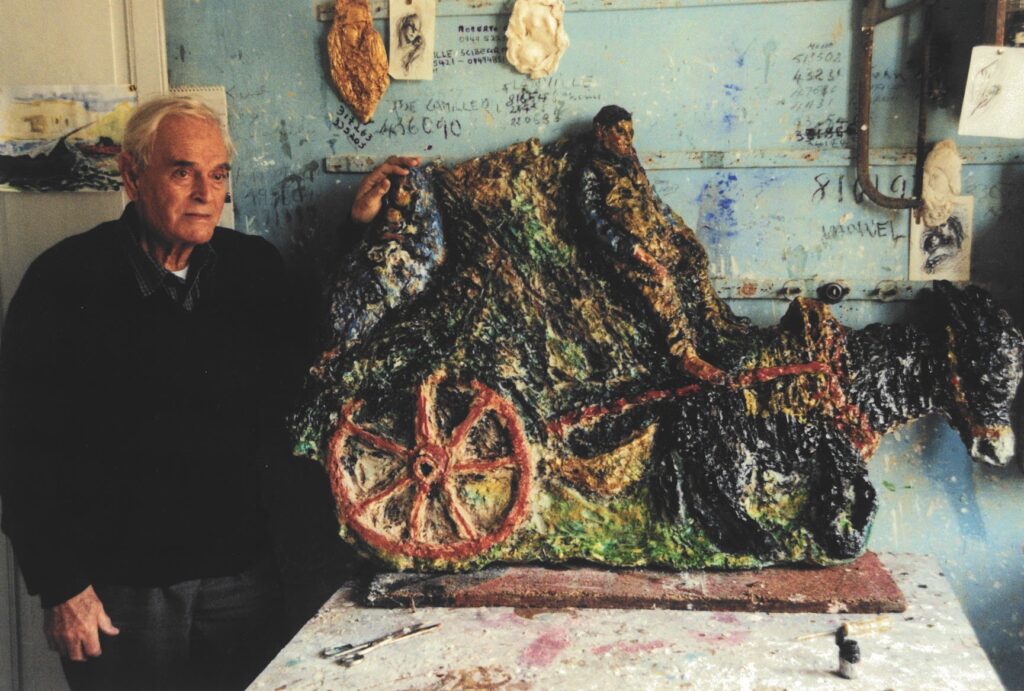
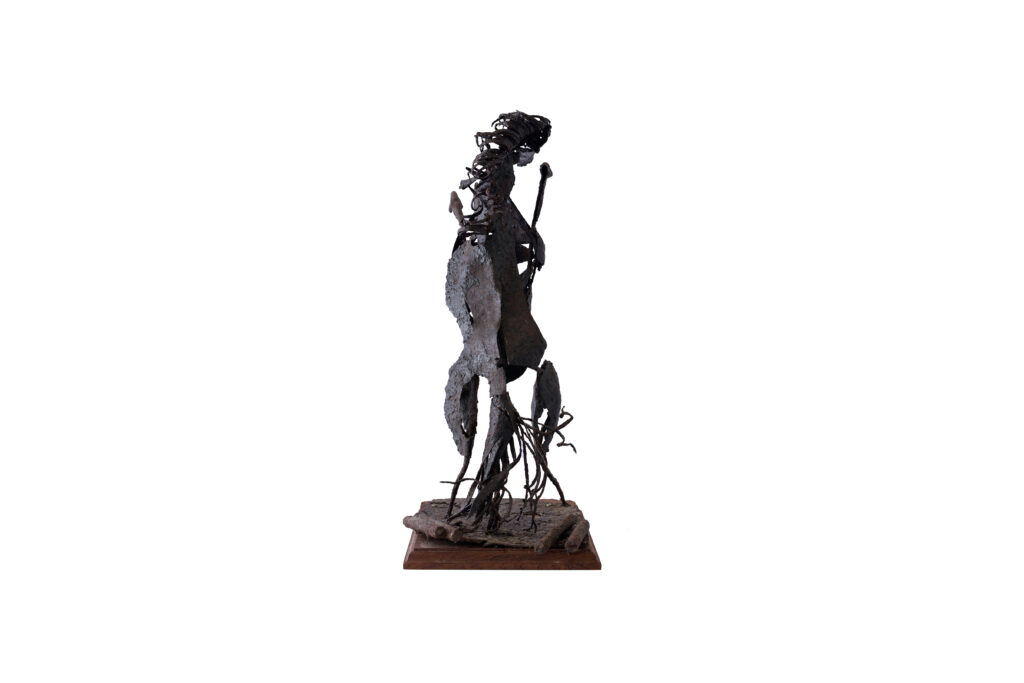
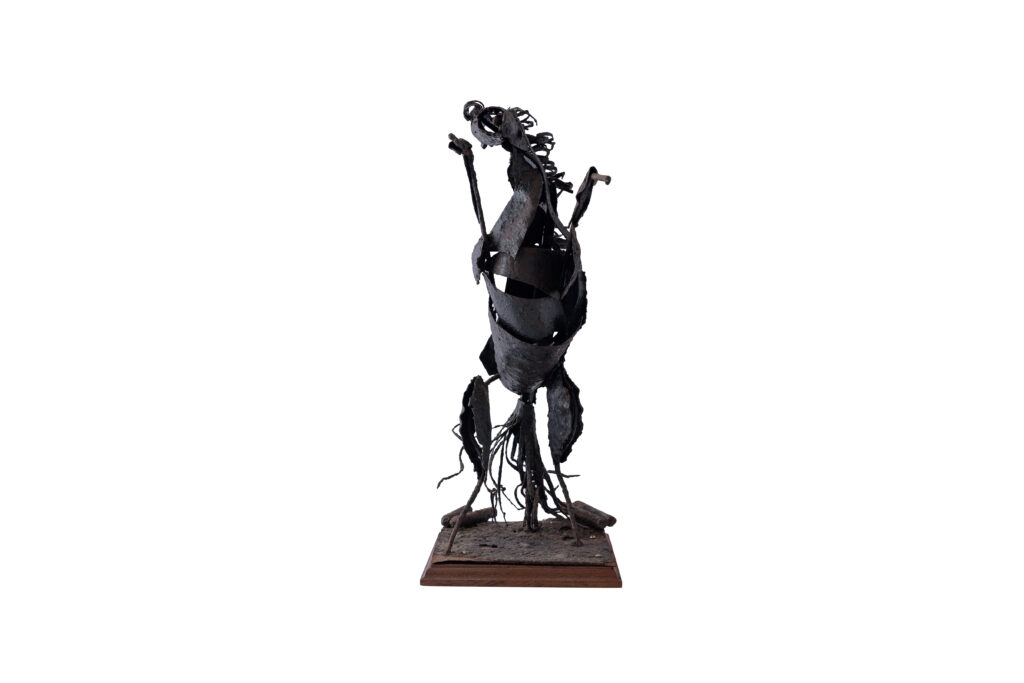
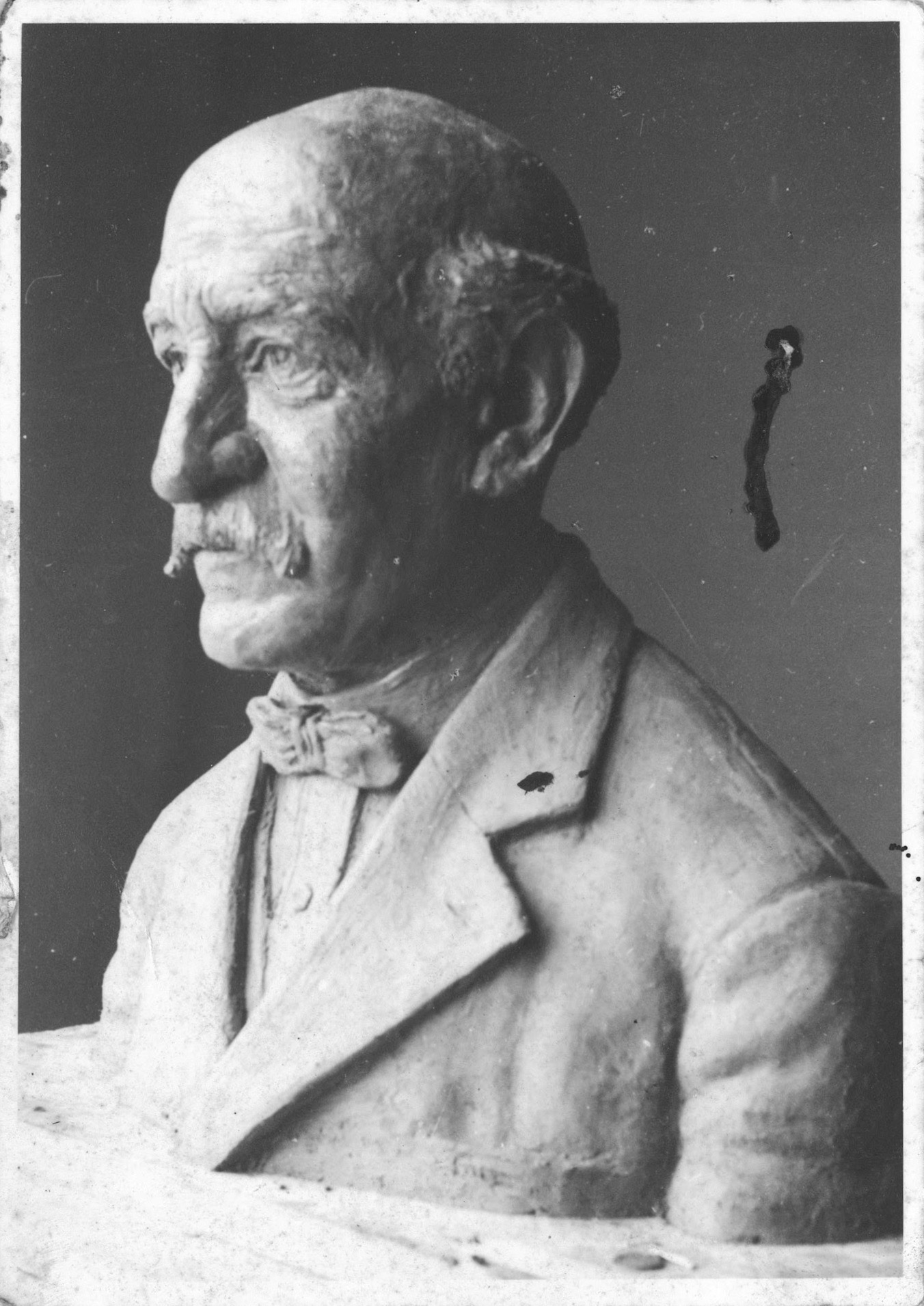
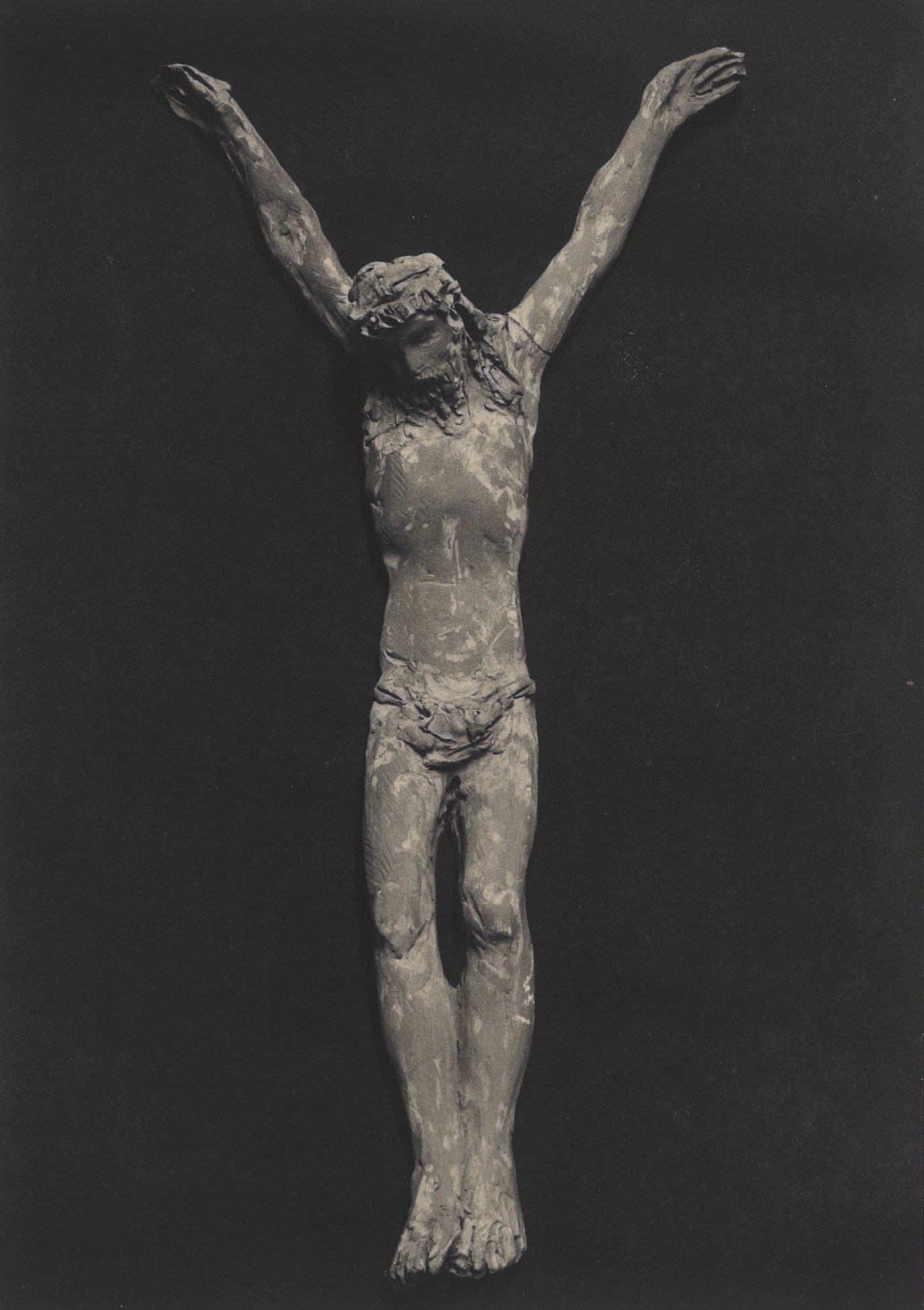
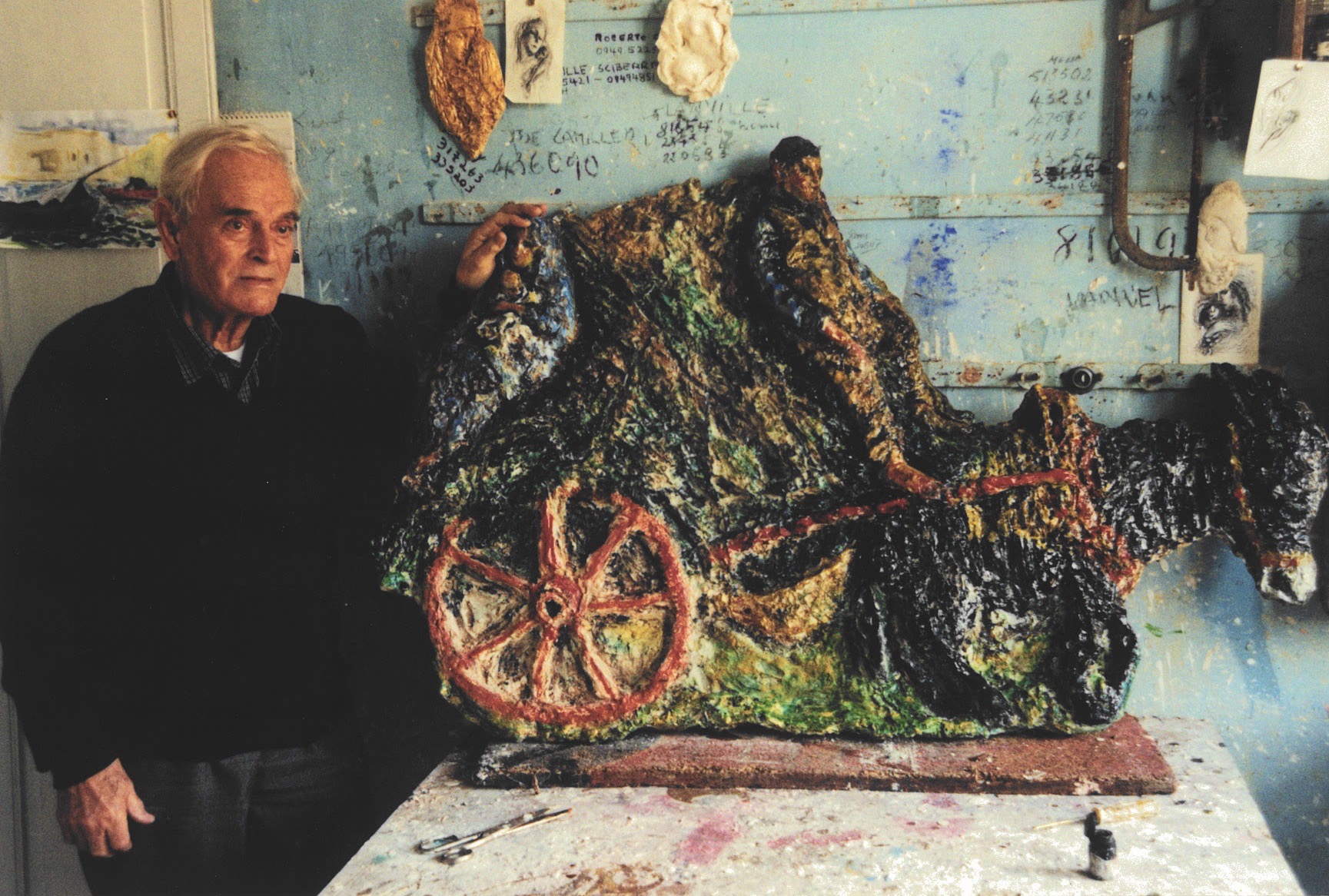
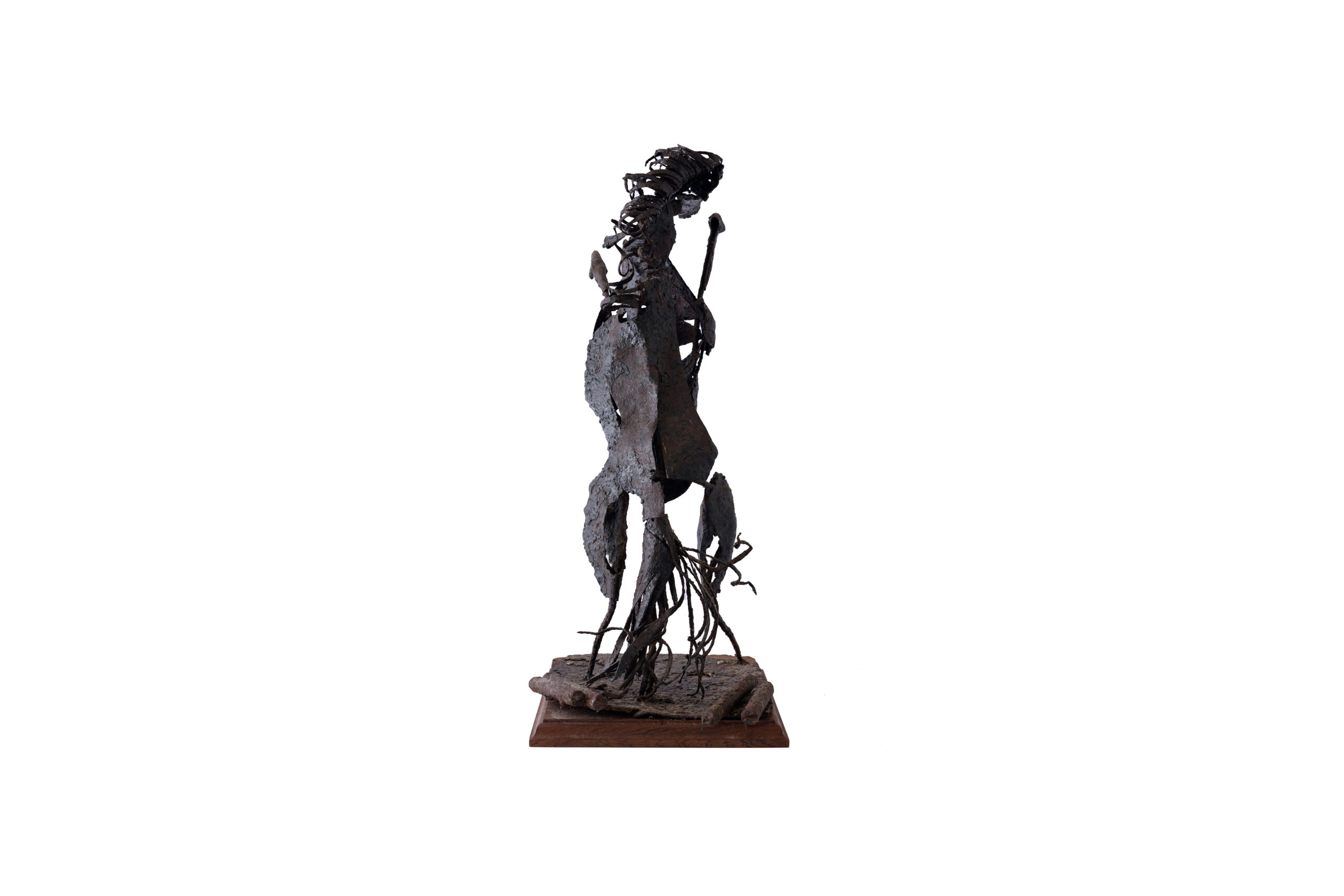
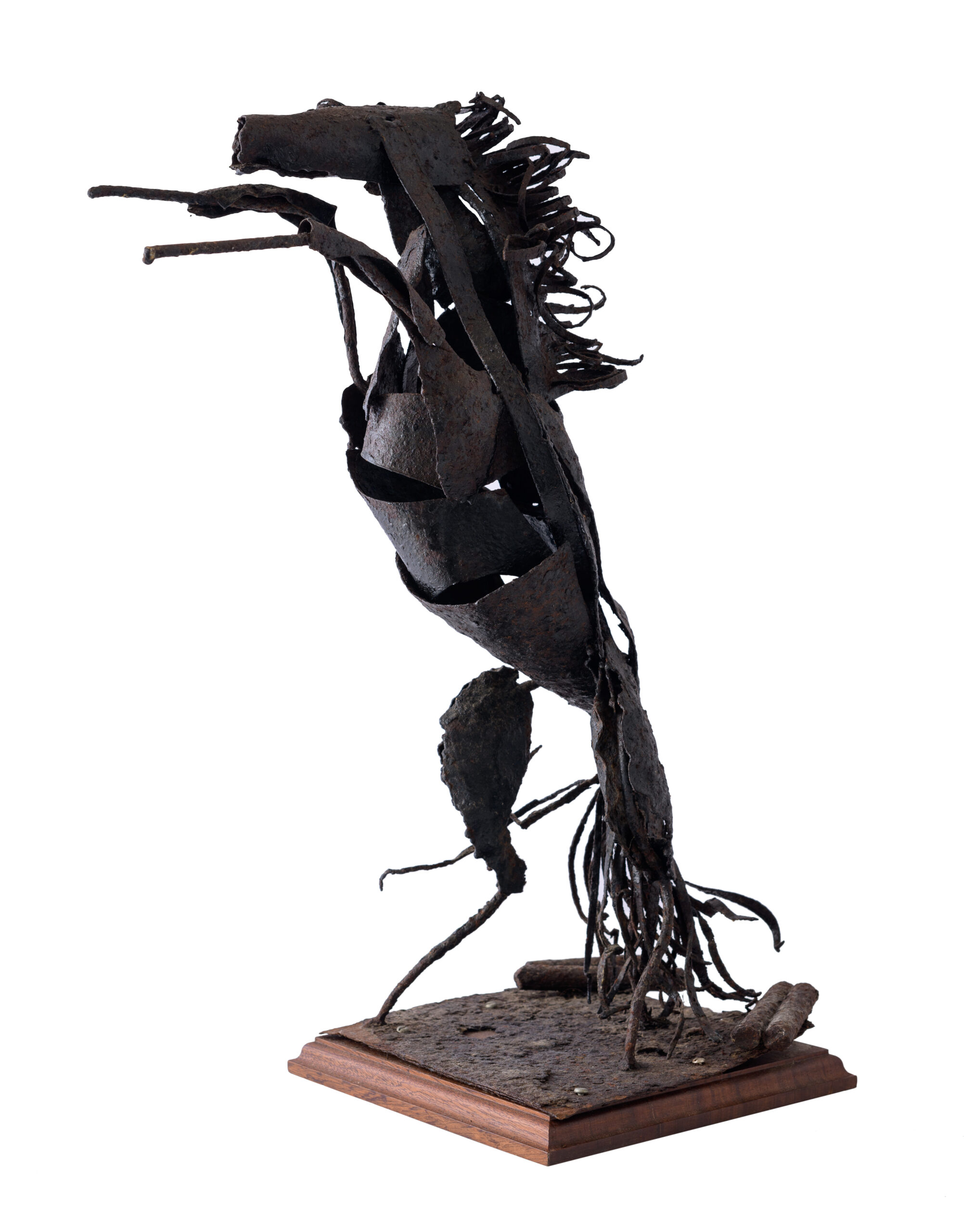
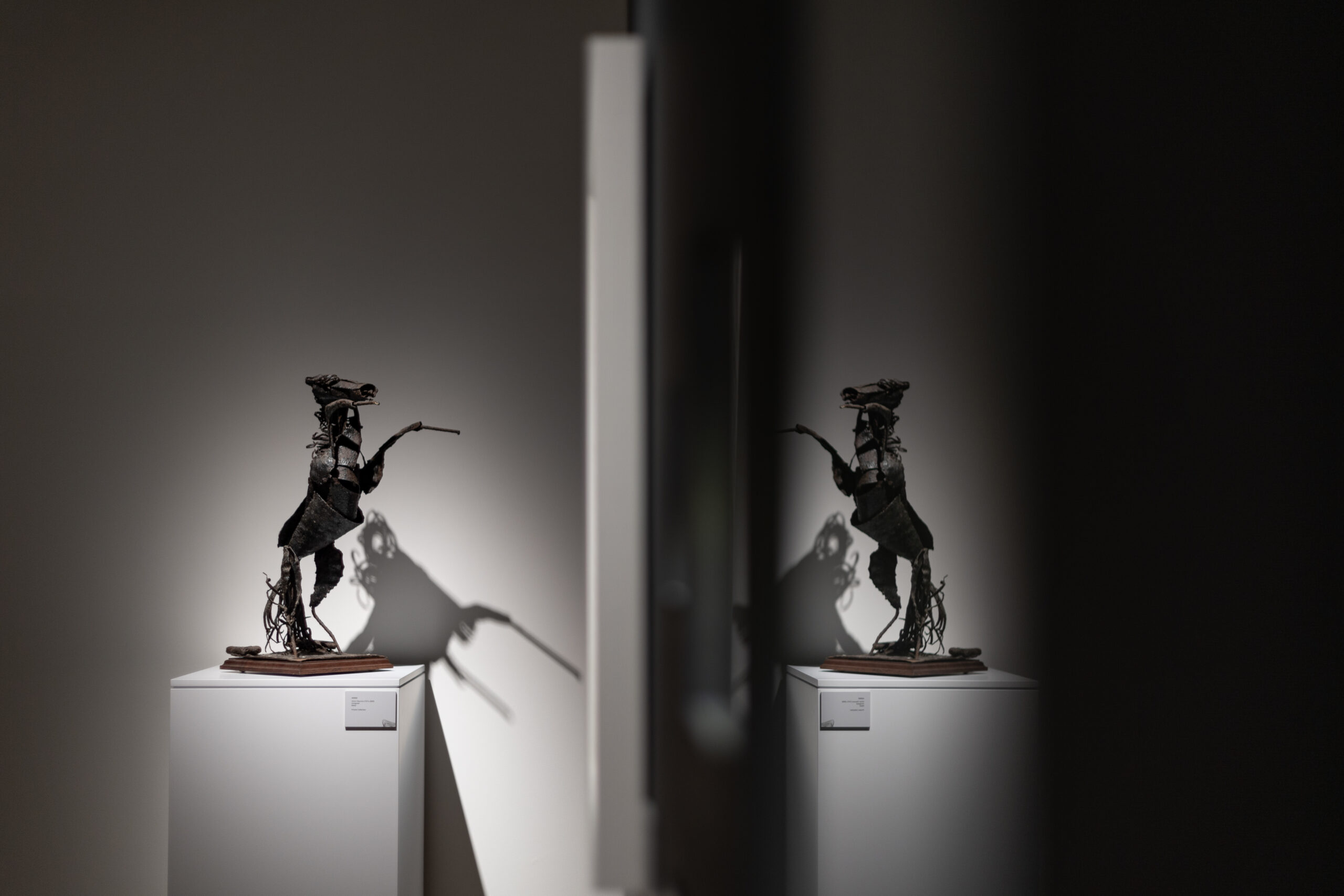
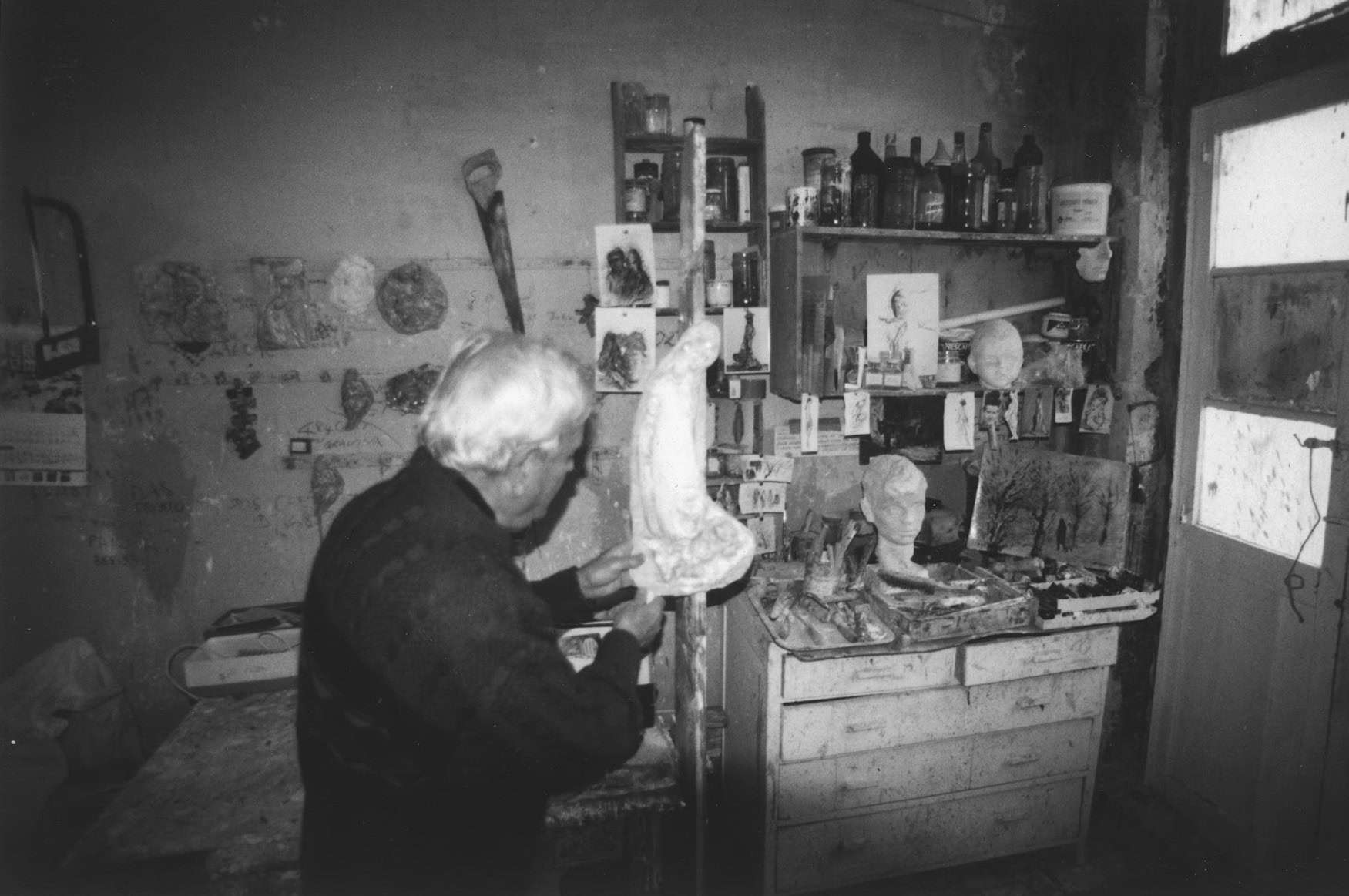
Diacono’s most recognised works are his group pieces – Horse-drawn carts with drivers, the three graces, nativity scenes, crucifixions, mother and child, as well as the many commissions he earned for portrait busts. These include Sir Themistocles Zammit, Alfons Maria Galea and Dr Albert Ganado among many others. Despite being a fervently religious man (so much so that all his sculptures began with him inserting a holy medal deep into the clay), his works did not make it into the Church, possibly because his impressionistic technique was not considered solemn or precise enough. Diacono’s sculpture is characterised by an uneven surface that displays all his finger markings. Figures and features are merely suggested through form and line, and rely heavily on the play of light. He liked his work to remain in its natural state as much as possible, rarely applying a glaze and sometimes even leaving them out on his roof in the sun or rain, allowing nature to create a patina. He sometimes painted over them with oil paints giving the works a matt finish. Diacono liked to constantly modify his works, never feeling that a work could be considered complete.
Diacono also sketched continually. Whether he was waiting in the car for his wife to run errands, or behind the desk at the Phoenicia Hotel, he sketched mainly people, also caricatures, that show his humorous side. Some of his favourites are those of Mabel Strickland, Freddie Lupi the manager of the Phoenicia Hotel and a permanent guest there, a certain Mr Magu. Sketching allowed him the freedom to experiment whilst testing his observation skills.
EXHIBITIONS
From his first collective exhibition in Rome in 1939 Diacono participated in various exhibitions back home in Malta throughout his career. He also formed part of international exhibitions in New York, London, Florence and Assisi. His first solo exhibition took place in 1998 at the University of Malta.
In 1952 Diacono married Antoinette nee Dingli and they had four children, Joseph, Lorraine, Andrew (an established artist) and Michael.
1; 2 In conversation with Joseph Paul Cassar 1998