
THE GLASS REVEALS
Dr Christian Attard
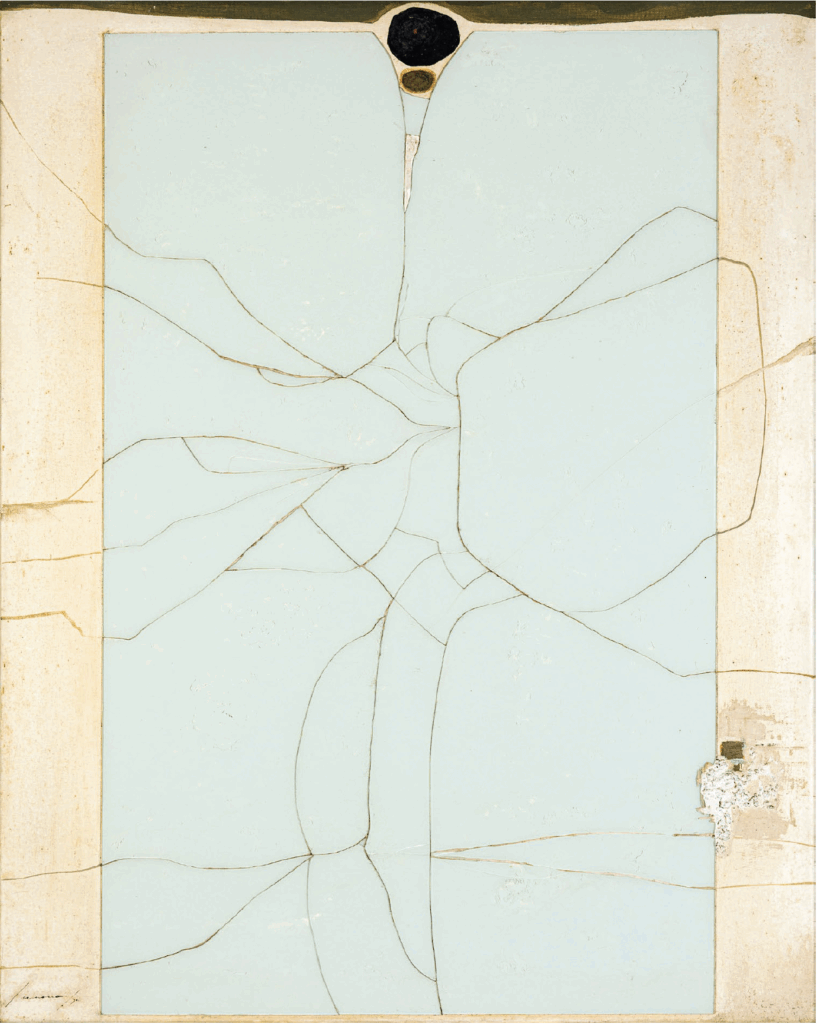
In this second instalment, Dr Christian Attard meditates on the critical forces at play revealed through the creation of the Glass Collages.
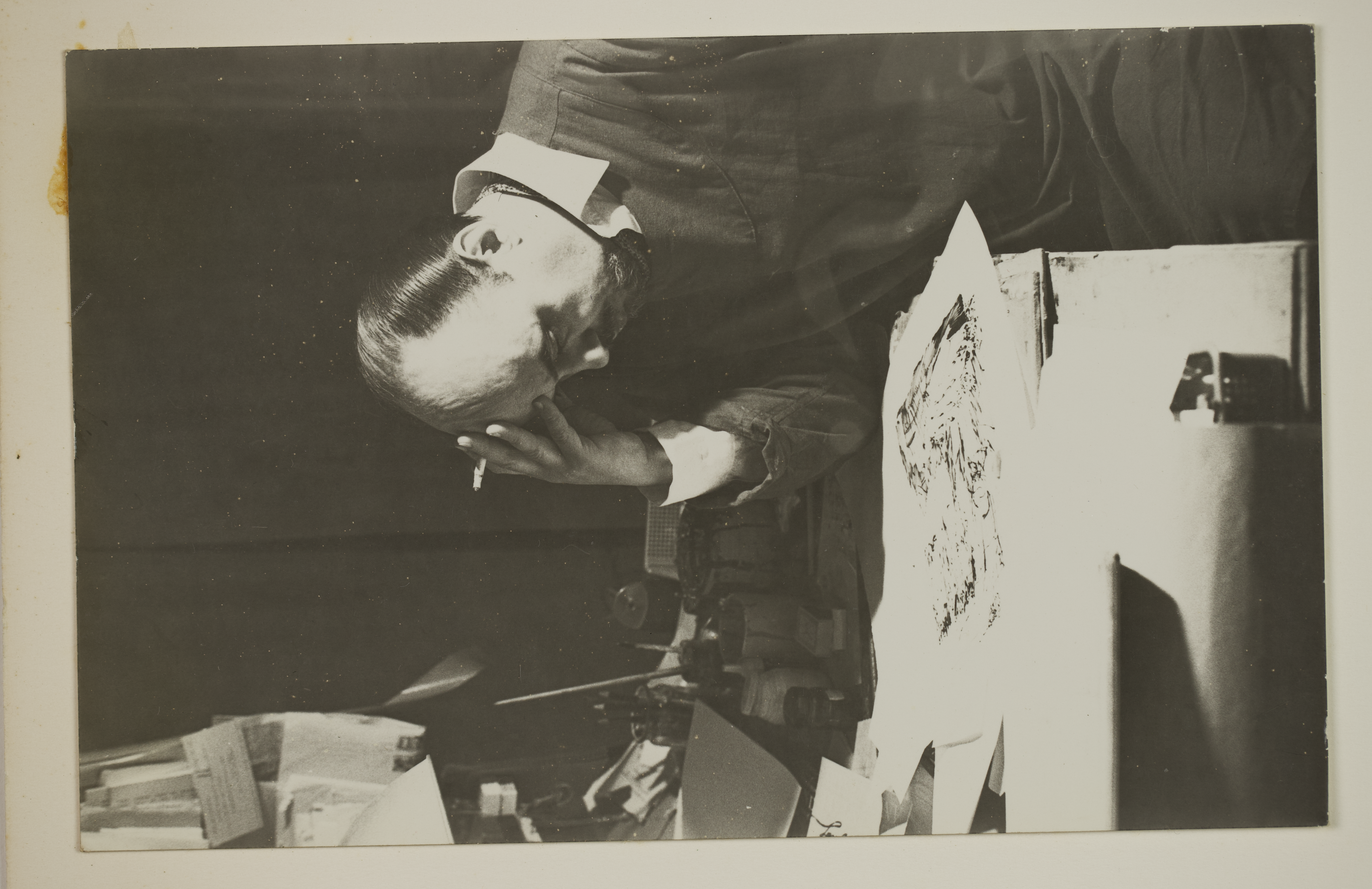
Think of Emvin in the late 1960s, pushing fifty, juggling the many expectations that society mercilessly imposed, and those he—just as mercilessly—imposed upon himself: artist, husband, father, man, Catholic, political being, friend, modernist, traditionalist, dreamer, bohemian, family man, lover, breadwinner, free spirited, constrained soul, Maltese, cosmopolitan: whole but torn apart.
Seeing his Malta equally rent apart under the yoke of its many factions and beliefs. Outwardly, he remained close to Archbishop Gonzi: the patron, the protector. Yet, inwardly, how could he not have wrestled with doubt? With disquiet? With the unease provoked by Gonzi’s increasingly reactionary decrees, the excommunications, the cultural suffocations, the private lives turned to public trials.
Secluded in his studio, perched on the top floor of his family’s townhouse in Battery Street, Valletta, a stone’s throw away from the Upper Barrakka Gardens, nestled between the heavy, honey-coloured buildings on one side and the vista of the Grand Harbour on the other with its promise of alternative worlds, Emvin sought to exorcise his inner struggles, usually after seeing that all members of his family were settled in and sleeping. Those were the hours he claimed his own, those bewitching hours: dark nights of the soul.
The crises, if one dares call them that, spanned the existential, the formal, the material, the aesthetic, the stylistic, the political, the spiritual, the personal, the national, the figurative, the abstract. Beliefs that once seemed so immutable were questioned. News of the space race, the war in Vietnam, drifted in from the radio, distant signals of a world breaking away from those certainties he once held so dear.
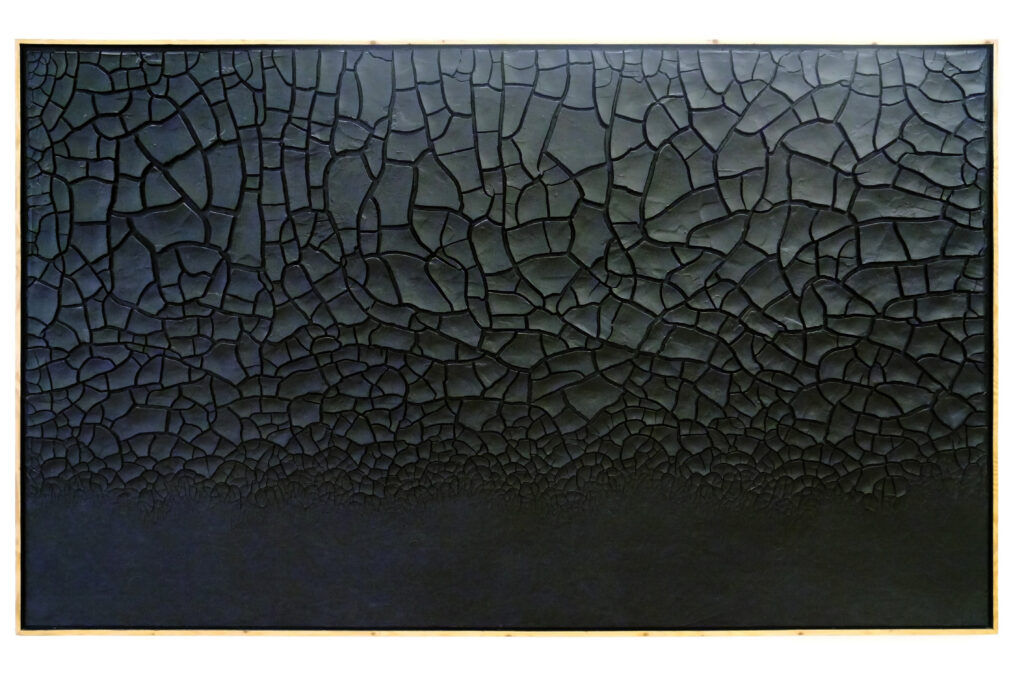
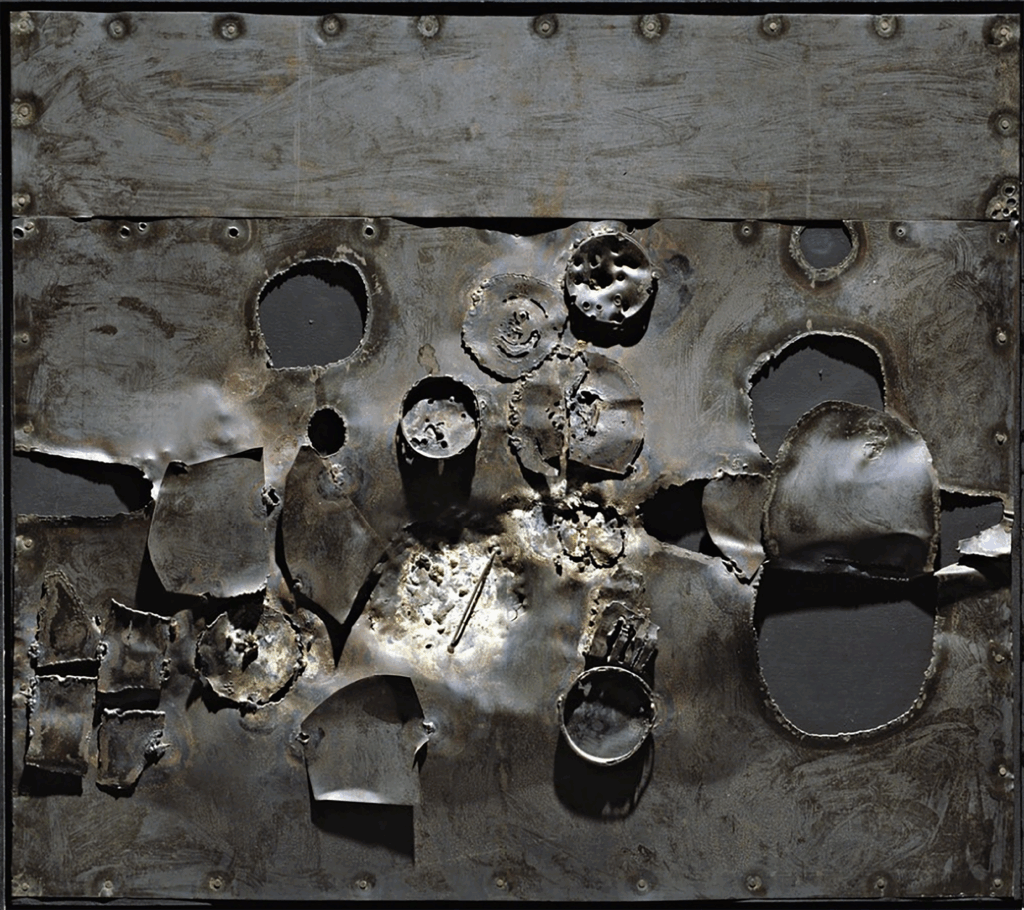
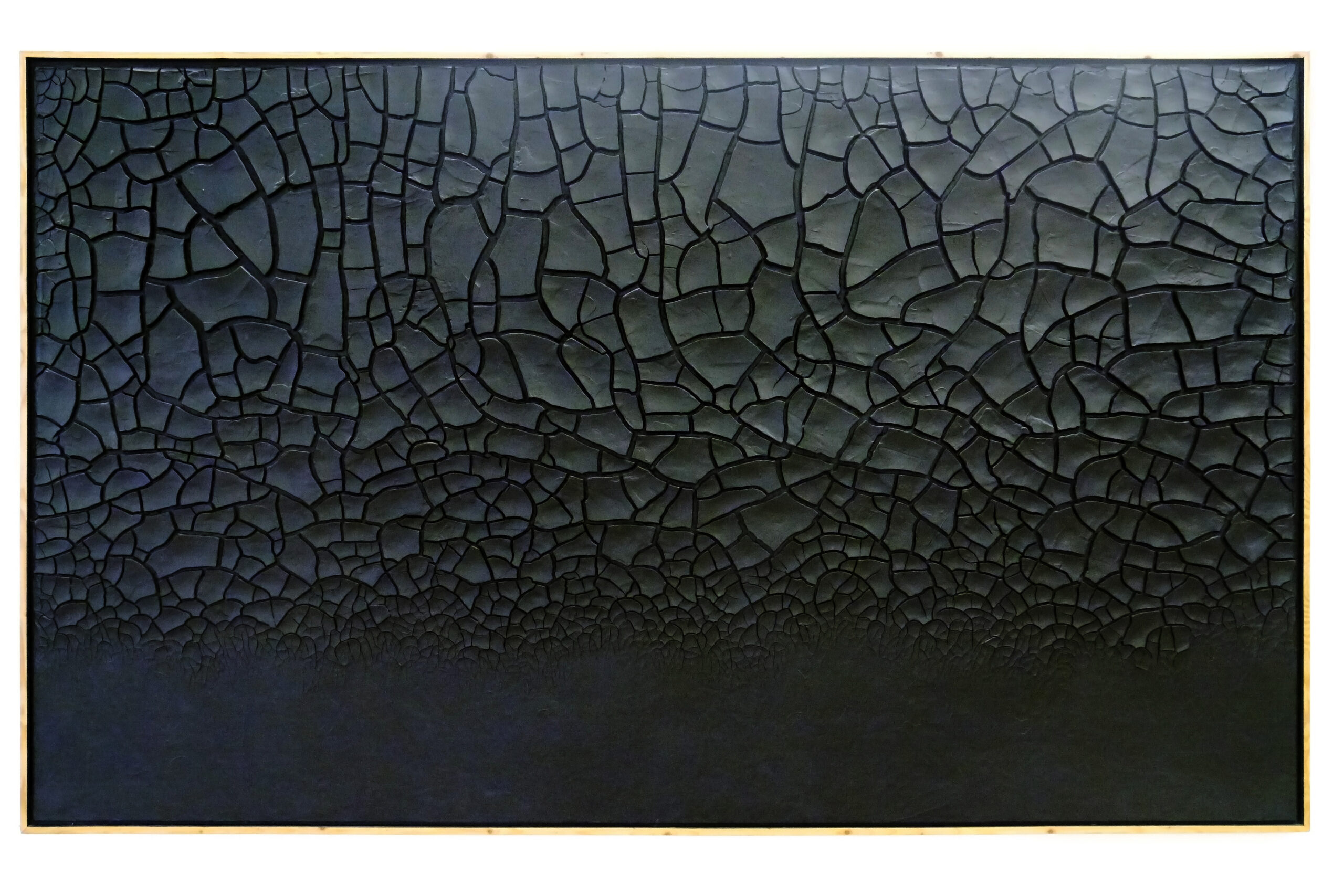
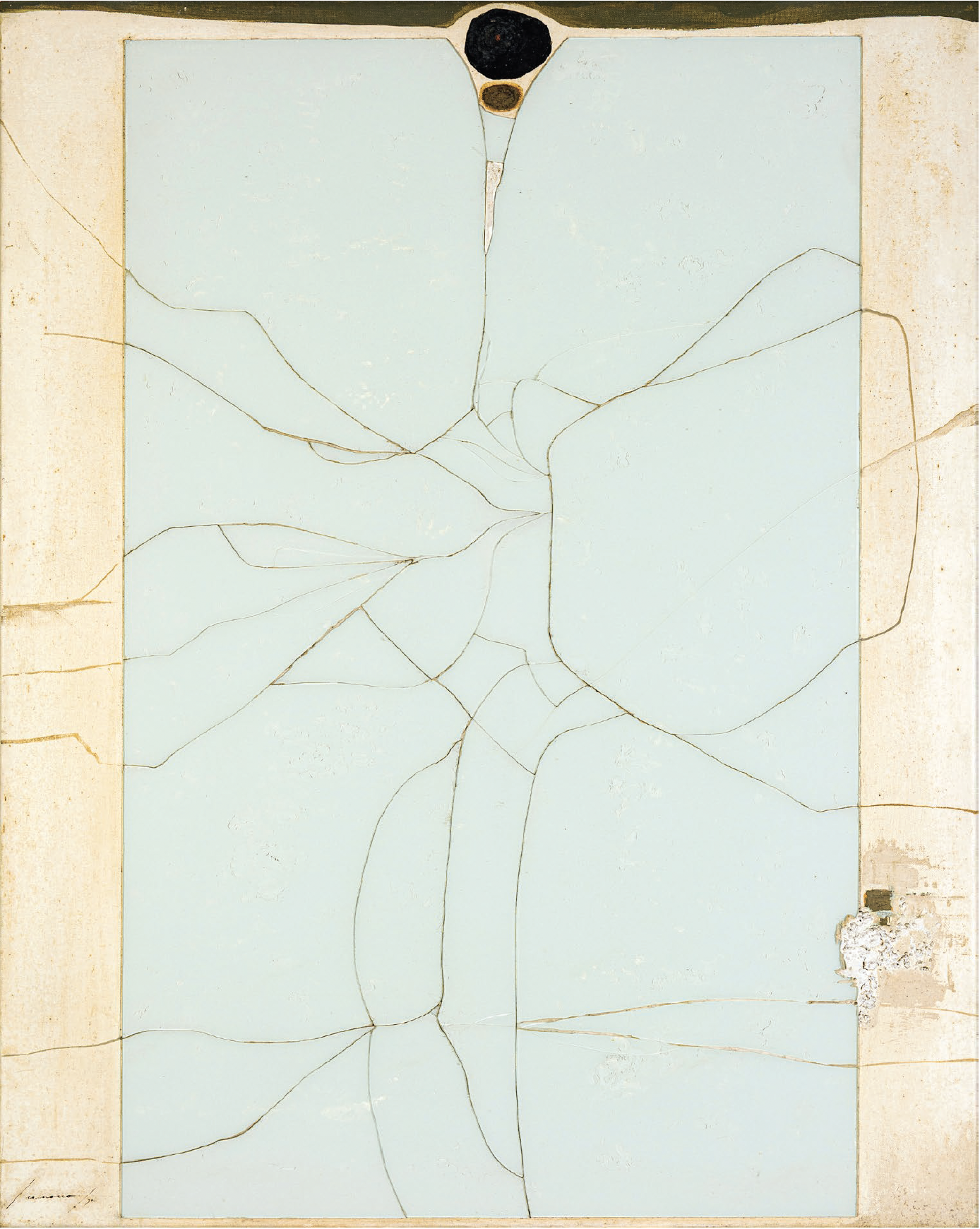
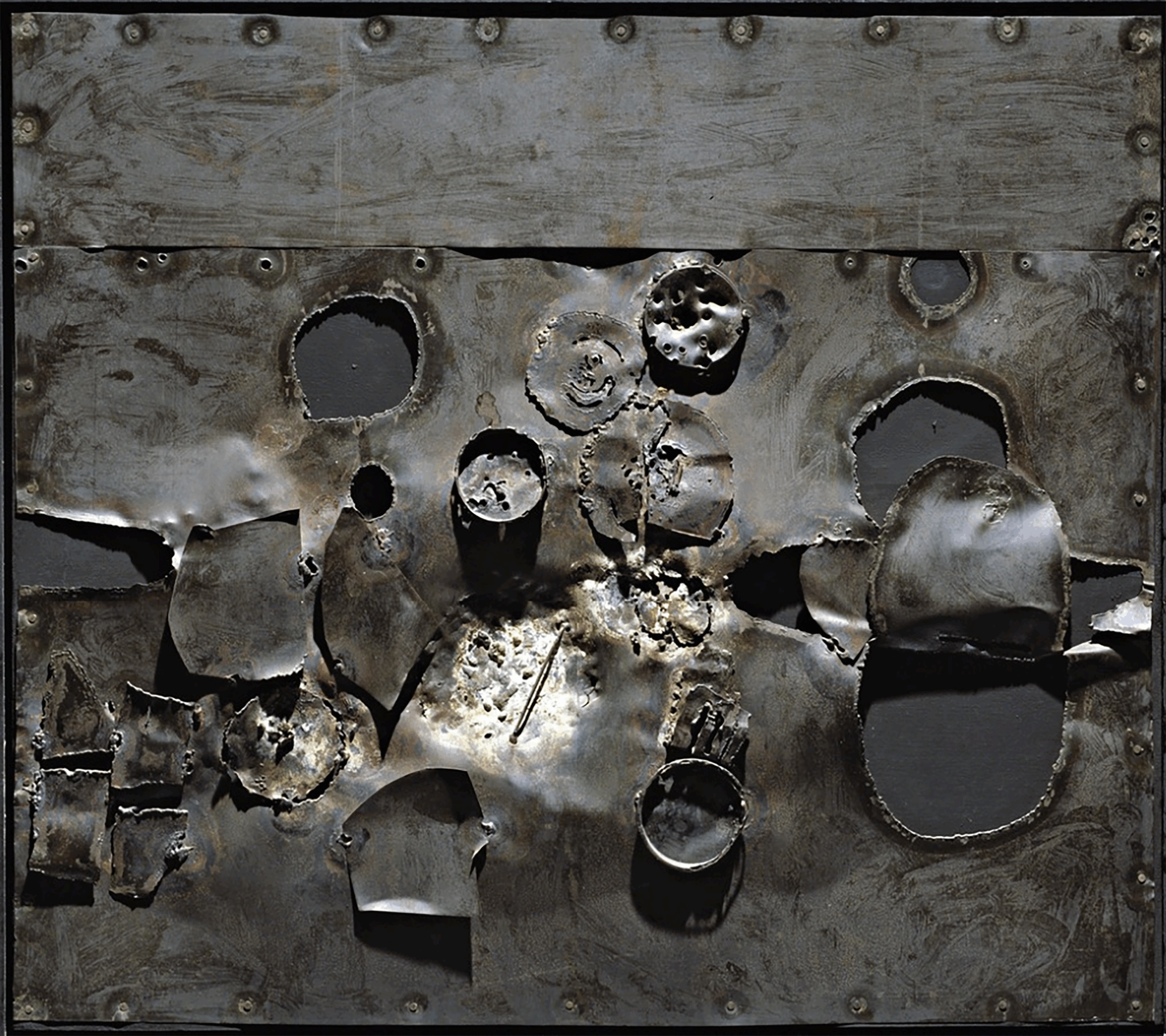
Emvin braved the deep and commenced a series of works that strove to resolve, exorcise, deal with the many voices that were threatening to pull him asunder. Systematically, and not without difficulty, seeking to break away from his many inherited preconceptions, Emvin chose glass as his main vehicle of expression. He must have thought the possible semiotic meanings inherent in glass as material exhilarating. But not solely. Playing in his head were Alberto Burri’s pushing at the limits of materiality—sack, metal, plastic—Antoni Tàpies’ and Lucio Fontana’s stretching the possibilities of the surface, building upon it with sand, straw, refuse, or going right into it, perforating, degrading, slashing, blotting, staining, gouging, puncturing. Material, typically inherently humble, as a conveyor of meaning, a conduit of memories, working against or beyond Greenbergian purity; materiality reifying half-remembered memories of war debris, bombed-out buildings, shelled lives, shattered existences, hollowed-out selves. Hope—a sliver; Beauty, perhaps?
Archbishop Gonzi’s predilected, Malta’s foremost ecclesiastical painter, the artist who dared imagine St Paul as Gonzi’s doppelganger, as a belligerent, sword-wielding warrior, the painter of Biblical truths, was atomising, subverting the system … himself.
Transforming.
This was no impulsive rupture, no out-of-the-blue transgression; all was meticulously thought out.
Controlled.
What looks like chance—fortuitous, raw, violent even—was only arrived at through meditation, repetition, measured destruction, willed creation.
Unmoored, but not adrift.
Beauty will save the world. If old-age academy-sanctioned ideas of beauty are anything to go by, Emvin sought them anew: Balance, rhythm, harmony? What if these principles could reorder the chaos?
To be continued
With many thanks to Victor Pasmore Gallery for holding the exhibition, Emvin Cremona: The Glass Collage, and to Giulia Privitelli, Evarist Bartolo, and Gilbert Calleja for inspiring deeper reflection on this subject.